Happy Victoria Day
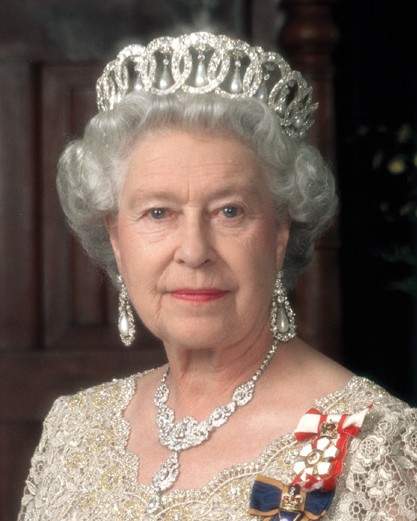 Long Live the Queen
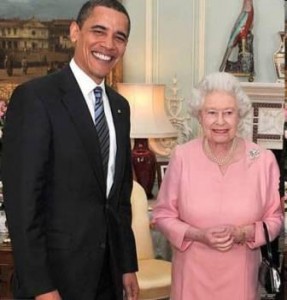 Barack Obama
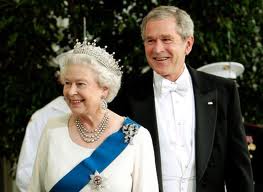 George W Bush
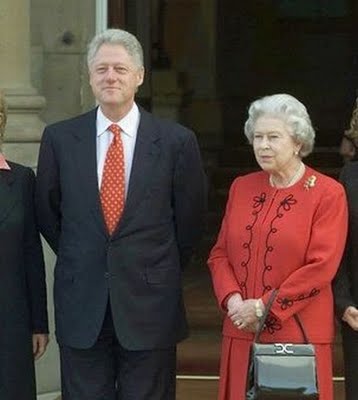 Bill Clinton
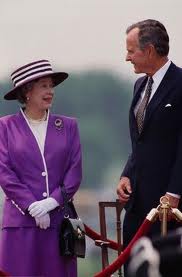 George Bush
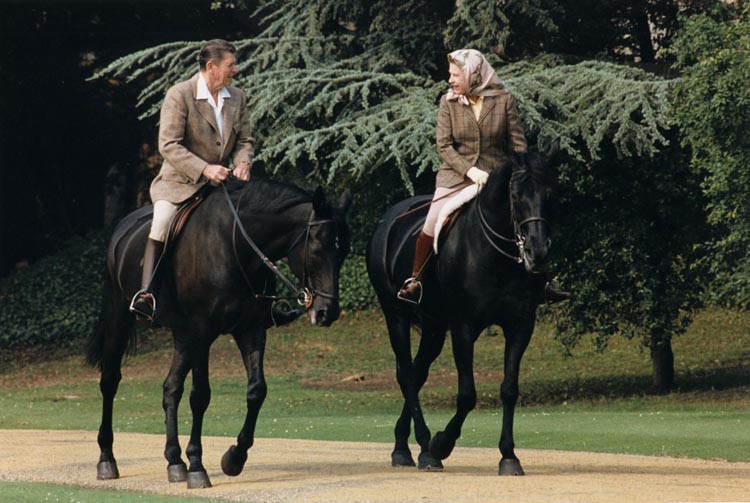 Ronald Reagan
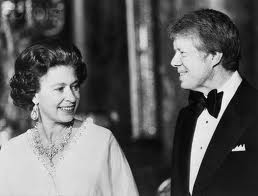 Jimmy Carter
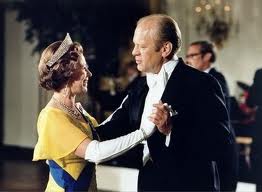 Gerald Ford
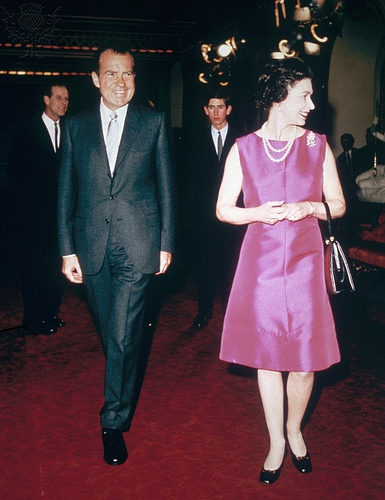 Richard Nixon
Queen Elizabeth never met Lyndon Johnson
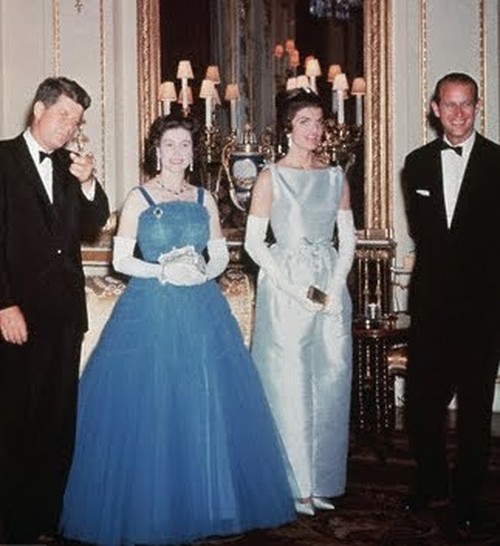 John Kennedy
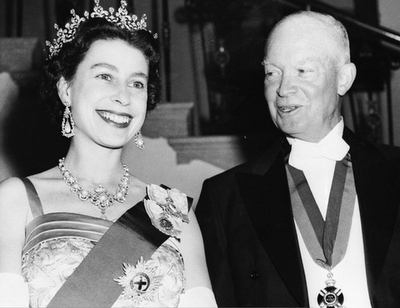 Dwight Eisenhower
 Harry Truman
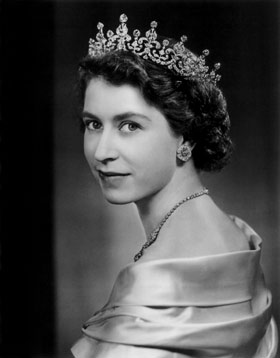 Queen Elizabeth II
Happy Victoria Day
Long Live the Queen
Barack Obama
George W Bush
Bill Clinton
George Bush
Ronald Reagan
Jimmy Carter
Gerald Ford
Richard Nixon
Queen Elizabeth never met Lyndon Johnson
John Kennedy
Dwight Eisenhower
Harry Truman
Queen Elizabeth II
 Believe it or not, it’s finally Spring, and to prove it, people all over the country are taking off their clothes. Suddenly necklines and hemlines are jockeying each other for position, waistbands are so low as to violate the natural laws of decency anywhere north of the equator, and, to coin an old joke, the girls are just as bad. Personally, I’m no follower of fashion; I have my time and I’m never going to leave it. Nor am I old enough to berate young people for wearing the same things I wore at their age. I really don’t care much about fashions, where they came from, where they’ve been or how they got here. Besides, I know enough about history to understand this too shall pass, and if you keep your clothes long enough, eventually they won’t fit.
However, I’ve noticed a distinct pattern in women’s clothing over the last 100 years. I’m not sure whether history follows fashion or vice versa, but in general, turbulent, troubled times favour the neckline, whereas affluent, settled times favour the hemline. I’m not going to speculate on the pop psychology of all this, but here’s a brief history. You can make up your own mind.
In the days just before World War I, most of Europe simply couldn’t wait to start shooting at each other. The world was in a mess. From Morocco to the Balkans, every second Tuesday brought another world crisis. There were petty wars everywhere and everyone with a trigger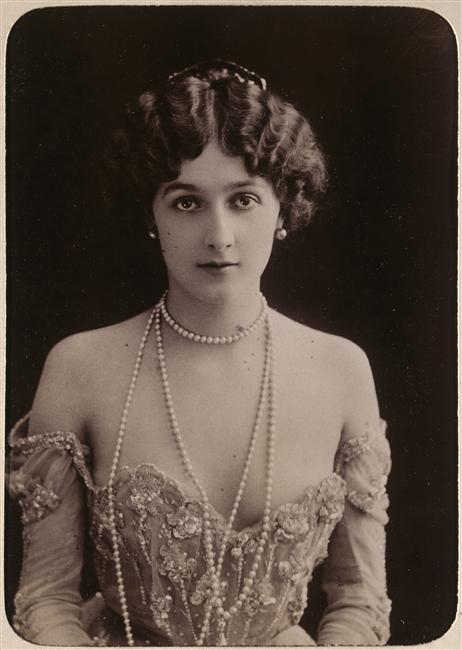 finger was itching to use it. Female fashions were dictated by the Gibson Girl, an hourglass figure with a bust size big enough to topple over on an incline. From the French salon to the Russian Imperial court, bare shoulders and décolletage were de rigueur for aristocratic women. And as the world trudged irrevocably towards all-consuming war, the plunging necklines got so extreme various churches spoke out against the style. Luckily, World War I broke out in 1914 or modesty would have been lost forever.
The minute the war was over and Johnny came marching home again, he discovered that the world was his oyster. The Roaring 20s were one big drunken bash. People everywhere were partying on the imaginary cash they were making on the stock market. Even Prohibition couldn’t slow down the dance. Meanwhile women’s fashion now favoured the flapper. She was a straight up and down girl with bobbed (short) hair, a 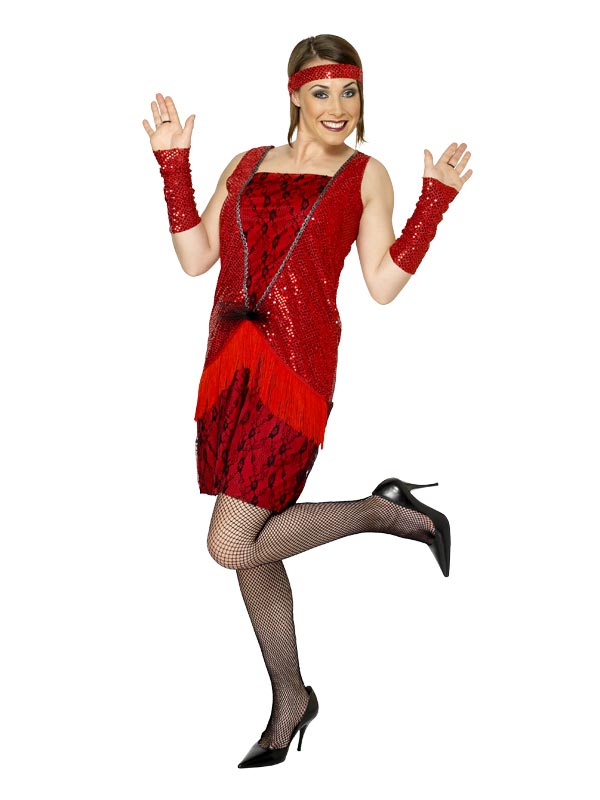 receding bustline and no hips. She wore the shortest skirts since Ramses the Half Naked built the Sphinx and the only cleavage available was the one visible from her backless gown. This fashion disappeared almost instantaneously on October 24th, 1929 when the New York Stock Market crashed and everybody had to get serious again.
In the 30s, women buttoned up and the hemlines dropped to the ankles. As the Depression deepened and the bad guys, Hitler and Mussolini, started marching, females took on a distinctly military look. They wore jackets that covered their hips and artificially squared their shoulders. Unlike the last time the world tried to kill itself, this time fashion was going to war. Throughout the 40s, women remained broad shouldered; the hourglass was out, and the linebacker was in. Just take a look at the Andrews Sisters to get a feel for it.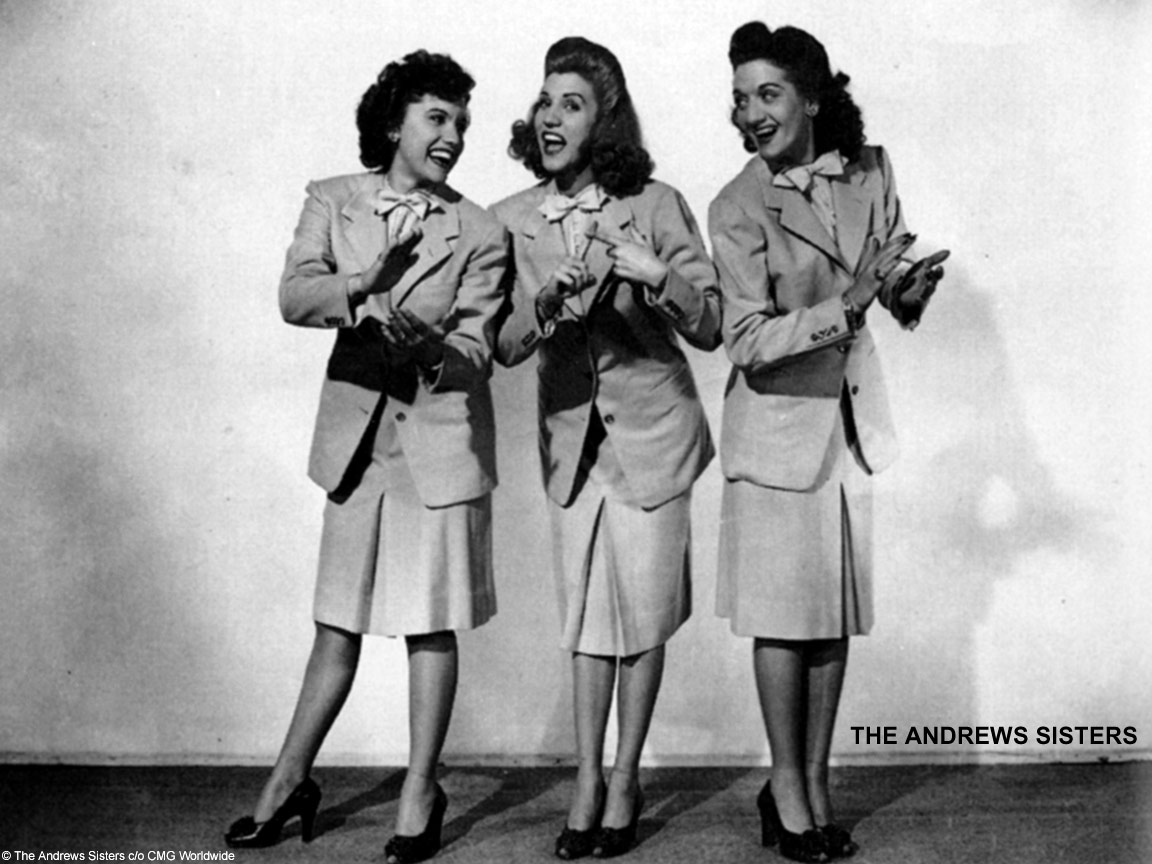
As the 40s slowly gave way to the 50s, and nuclear weapons brought a clear and present danger that humans could extinguish all life on the planet, women stacked on the petticoats again. They wore a starched apparatus called the crinoline which flared at the hips so abruptly it completely disguised the female figure. They also wore pullover sweaters, lightweight and tight, which combined with the sturdy bras of the time made the protruding parts look like they’d been put in a pencil sharpener. This was the Sweater Girl Look that lasted well into the 60s. It was the time of Jayne Mansfield, Marilyn Monroe and ever threatening nuclear holocaust.
But there was also a fashion schizophrenia going on in the 50s. Employment was high, money was plentiful and the suburbs were solid and sturdy. Everybody and her boyfriend had a car. These conditions gave us a few fashion anomalies. There were the B-grade science fiction movies for example, where the sweaters were tight and the skirts were flared and short. Most notably, the bikini was a half naked salute to the sun and the Pacific islands of the Bikini Atoll, where, in 1946, the United States military detonated nuclear hell and wiped out paradise in six and a half seconds.
The 60s going on 70s was the last time female fashions were a single mass market. Despite what historians tell us about protest and discord, the 60s were a drug-induced fiesta. Young people might have protested during the day, but at night, pot and peyote ruled, music and dance were primitive, birth control was quick and easy and so was sex. The party didn’t stop until Nixon’s National Guard took matters into their own hands at Kent State in 1970. In 1965, Mary Quant introduced the 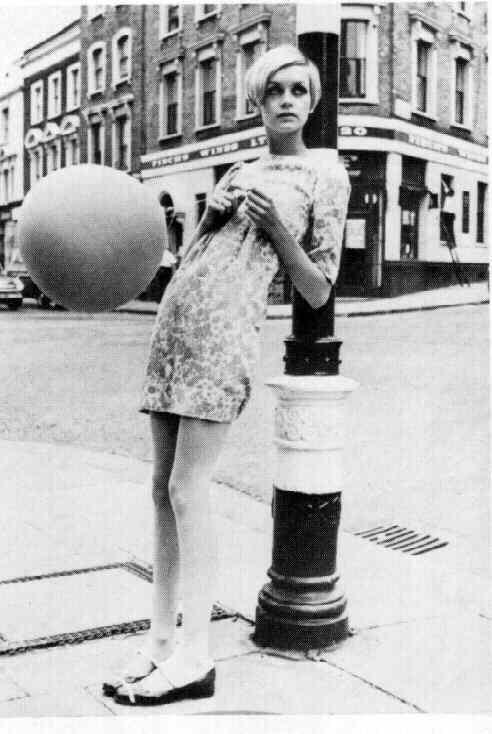 miniskirt; $6.95 worth of fabric that covered the bare necessities. Later she would go even further with the micro-mini and hemlines disappeared entirely. The first supermodel, appropriately named Twiggy, drove the female form to the very edge of annihilation. Thin was in so completely that the old-fashioned flapper looked positively voluptuous. The little black dress became essential day, evening and professional wear, and women everywhere learned to bend at the knees. The fashion 60s culminated when Ms. Quant premiered hot pants, an ill-conceived gesture to modesty that was snatched up by strippers and prostitutes around the world and has since been in continuous use.
The last days of dictated fashion came with disco. In reaction to the Women’s Movement and the rise of feminism, fashion designers took to adorning men: the polyester leisure suit is the symbol of the age. When disco died, prominent male fashion died with it.
For the last two decades of the 20th century, fashion was not so much about style as trend. There were no overwhelmingly accepted forms of dress; however, both men and women did follow a number of trends religiously. Hemlines and necklines made minor seasonal adjustments up and down, in quick reaction to the state of the world, but most fashion remained in flux. There was, however, one female feature that did distinguish itself – the bum.
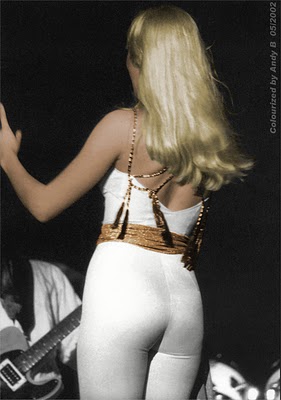 Introduced in Australia, in 1977, by Abba singer Agnetha Faltskog, the bum has dominated fashion ever since. It shows up everywhere and has become the single fashion constant in a world that gyrates wildly between feast and famine. Clothes have tightened up proportionately to display the bum prominently, and in some cases, silicon has been added to enhance its features. Even today, in the 21st century, the bum remains front and centre on the fashion scene; Jennifer Lopez and the Kardashian sister are perfect examples.
Personally, I think the bum is a passing fancy and the fashion world is just catching its breath and waiting for another party or crisis to right itself. In my mind, history will win out, but you can make up your own mind.
 I think it’s finally happened. We may have finally chased the White Rabbit of Ridiculous down the dark hole and are about to end up a shell-shocked Alice in some Bizarro-Wonderland. I expect to see the Cheshire Cat any day now, and once he shows up, the Mad Hatter and the Red Queen won’t be far behind. My infernal optimism for the future of our society has been shaken to the core. Recent events are turning my girlish laughter into tears.
As everybody from Biloxi to Bangkok knows, Barack Obama turned loose his weapons of mild destruction the other day, and the result was a double-tap to the head of the President of the Evil Club — Osama Bin Laden. I, for one, broke out the champagne and watched the cheering in the streets on TV. However, it appears our celebrations were premature. Nobody in the US military ran the operation, codename Geronimo, past the all-powerful Politically Correct police. Apparently, using “Geronimo” as the codename for the operation is a direct insult to all Native Americans. (I’m not making this up!) Apache Tribal Chairperson Jeff Houser, of Fort Sill, Oklahoma, has sent a letter to the White House (displayed on their Tribal Website) to ask the President to apologize for juxtaposing Geronimo’s name with Osama Bin Laden’s. According to the letter, Native American children “are facing the reality of having one of their most revered figures being connected to a terrorist and murderer…” Houser continues: “Think about how they feel at this point.” This is an interesting rhetorical question to a black president who grew up around a few stereotypes, himself. The letter goes on to say that Native Americans in general — and Apaches in particular — find the codename “painful and offensive.” Regardless of intent, the military use of Geronimo is yet another manifestation of the history of oppression Native Americans have suffered ever since Chris Columbus brought his tour group to the Americas, over 500 years ago.
I’m not one to downplay the raw deal Native Americans got during the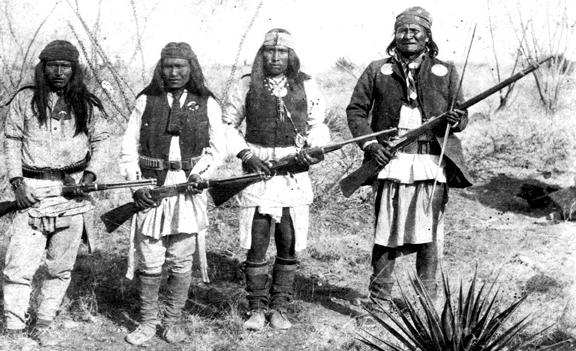 great European migrations of the 18th and 19th centuries. Nor am I one to try and talk history in an age as repressive as our own. However, stretching the umbilical cord of injustice from the Chiricahua Mountains in Arizona to a mansion in the suburbs of Islamabad, Pakistan is beyond reasonable. We are about to go through the looking glass at warpspeed, so I think we should pause briefly and examine our trajectory.
At the risk of splitting hairs, it might be useful to note that Geronimo’s name wasn’t even Geronimo; it was Goyathlay or Goyahkla. (It’s impossible to render spoken Apache* into written English) According to the story I was told many times, and partially confirmed historically, the name Geronimo was an Apache joke nickname given to Goyathlay after a Mexican he was busy killing, repeatedly invoked the name of Saint Jerome (in Spanish Jeronimo.) Apache warriors thought it was hilarious that, in the middle of a life-and-death situation, someone would call on an imaginary spirit for mercy. Later, Americans heard Goyathlay called this, didn’t know any better and figured that was the guy’s name. It stuck — on both sides of the cultural divide.
Secondly, Geronimo himself was probably the greatest hit-and-run military tactician North America has ever produced (along with Cochise and Jeb Stuart.) For thirty years, off and on, he challenged the might of both the United States and Mexico, simultaneously. Although always vastly outnumbered, he outmanoeuvred and outfought every military force sent against him, and he was never actually beaten in battle. His daring raids tied up entire armies in fruitless chases that covered the entire southwest, from Texas to Arizona and the northern Mexican states of Sonora and Chihuahua, as well. While I can’t speak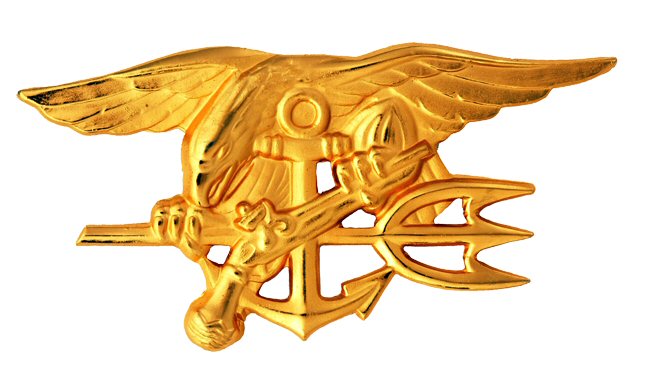 for the guy personally I think Navy Seals dropping out of the sky in the middle of Pakistan, tapping the hammer on the Archduke of Evil, grabbing the body and getting out of there without a scratch, is just the kind of operation he would have loved. By all reports, he was a feisty old fella up until the day he died and probably would have gone in with the Navy Seals, given half a chance.
Lastly, I don’t know anything about covert military operations, but I do read a lot. Codenames are not chosen because they bear any relation to the objective — nor, by the way, are they chosen at random. They are chosen because they are particularly distinct, usually have more than one syllable and avoid too many p’s, b’s and v’s. All this is so they can’t be screwed up by excited young people in the heat of the moment. “Geronimo” fulfills these criteria, and that’s it. A few of the Navy boys may have made the big fist and yelled, “Hell, yeah! Geronimo!” but considering they were about to be shot at I don’t think anybody should be too offended by that. Frankly, I don’t think anybody should be offended, at all.
I’ve said all this to say we need to step back from the linguistic House of Horrors we are creating for ourselves. The time and energy we spend being outraged verges on the ridiculous. Any number of groups have gotten the shaft over the years, but witch hunting our language is not going to change that. Certain words are always going to be offensive, I agree — especially when spoken in anger or hate. But not all words carry that connotation in every circumstance. We need to quit chasing hurt feelings and use that same energy to deal with real bigotry in our society.
Oops! Forget it! I just heard the military has changed the name to Operation Neptune Spear. I’m off to find Tweedledum and Tweedledee.
*I’ve used “Apache” instead of “Chiricahua” because it is more familiar to everyone.
 WD Fyfe