 A couple of weeks ago, I got into a hopeless discussion (argument, for the uninitiated) with some young people (under 30) about education. I haven’t taken a beating like that since Betty Jones (not her real name) and her 2nd grade boyfriend decided my lunch was more interesting than hers. The problem was, in both cases, no amount of reason was going to be sufficient to change anybody’s mind. Unreasonable people, with big boyfriends, have a way of winning discussions. In the early part of the evening, I relied on Aristotlesque logic. I laid out concise theses, which I supported with facts and observations, which in turn, naturally led to the only possible conclusion: mine. Q.E.D! Their response was “Crap!” (or a somewhat stronger version of said same.) I spent the rest of the night — and at least two more bottles of wine — fighting for my verbal life against wave after wave of anecdotal evidence, non sequitur reminiscences, rhetorical questions and profanity. The kids were clearly angry about the fuzzy end of the lollipop they had received at the hands of liberal education, but they couldn’t articulate it. Therefore, even though I knew they were intelligent young people, they looked just about as dumb as they assured me they weren’t.
I’m not going to rework the discussion here. That wouldn’t be fair. But my position was “Stay in school you’re going to need it” and theirs was, the oft repeated, “Crap!” (or a somewhat stronger version of said same.) This really surprised me, because my generation and every generation before mine has worshipped education. Ever since Gideon outwitted the Midianites, it’s been seen as, not only the magic carpet of social mobility but the keys to the bank vault. Even in the darkest of the Dark Ages, education was the one thing that gave ordinary peasants a leg up in society. A millennium later, our contemporary world is so compartmentalized that, without a specialized education, you are almost certainly relegated to tier-two employment – Starbucks, et al. Either that or you could luck-out and land a union-protected public service job (but you might want to buy lottery tickets on that one just to be on the safe side.) Of course, there is intrinsic value in learning for its own sake. Nobody denies that, but practically speaking (which is all I was doing the other night) it’s all about where the money is.
My young friends beg to differ, however. They see education as a great wormhole that eats time, energy and student loans, then shoots them out the other end, no wiser, several years older and deeper in debt. While admitting that post-secondary education is indeed a necessity, they also see it, for the most part, 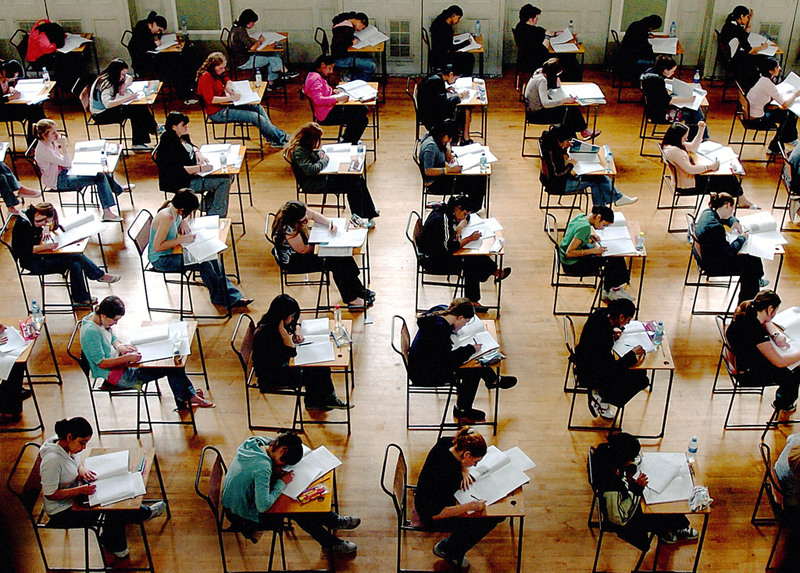 as a waste. Their argument is, why should they spend four years and forty thousand dollars for information they already know or can find on the Internet? To them, a liberal education is merely a thinly disguised tactic to keep them out of the job market for as long as possible, and a single university or college degree is a ticket to poverty. The “piece of paper” as they call it, with disdain, is not essential preparation for future employment but an artificial barrier to their own advancement. With it, the only guarantee is student debt. There are not that many high-priced jobs going begging these days, and experienced expertise trumps recent graduation, every time. Remember, these kids are making cappuccinos with a lot of underemployed PhDs. However, without a diploma (of some sort) there is a serious top end to whatever employment they find. Whether they’ve landed their perfect career/job or they’re just getting a pay check, without accreditation, they’re going to stay where they are for an awfully long time. It’s a no-win/no-win situation, and they know it.
To be fair, the kids have a point. However, they’re missing some essential ingredients. First of all, the big bad world out there has never heard of them. Education is the hello handshake that separates them from the herd. To be brutally honest, to employers, a degree is just shorthand for “at least the guy hung in there for four years.” Secondly, education, off its own bat, is useless. It needs thought and practical application. Getting a degree in Earth Science, Medieval Dance or the infamous Art History is indeed a ticket to poverty. Our society is awash in people who found that out – the hard way. The trick is fitting education to employment, even if it isn’t a perfect match. Sometimes, the difference between doing what you like and making change at Chevron is flexibility and imagination. Finally, and most importantly, only about half of post secondary education occurs in the classroom. At this level, gathering information is nothing serious. The kids are right; it’s all on the Internet. The important stuff is learning the complex skills of analysis, organization, communication and time management, to name but a few. The smartest person in the world is just a German Shepherd with a thumb if he can’t find his notes, doesn’t have the discipline for deadlines or can’t express his ideas effectively. Anybody can Google “the capital of Poland,” but it’s post-secondary education that teaches us how to use that information.
It might have been the wine, but I wasn’t this articulate the other night. Maybe it’s time for Round Two. After all, I met Betty Jones years later, and we came to an understanding over a couple of churros and a bottle of Kahlua.