9/11: A Glimpse into the Future

Ten years is a long time.  Many contemporary relationships don’t last that long.  In fact, we’ve been living with terror longer than it took a friend of mine to adios two of her ex-husbands.  People need anniversaries, though, even if they are of terrible events like 9/11.  They’re important.  They’re like perpetual mid-term exams; they let us know whether we’ve been paying attention to the important bits or just spacing out.  However, on anniversaries, the natural tendency is to look back into the known world rather than forward into the unknown.  Despite assurances to the contrary, very few of us like to “Boldly go where no one has gone before.”

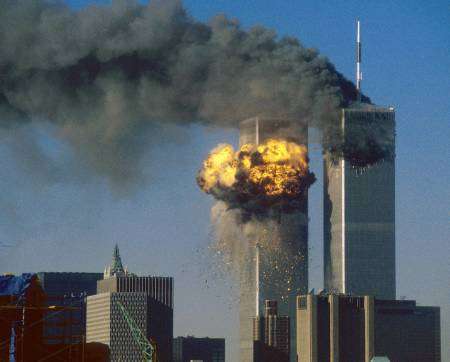
As a result, the talk across the media on 9/11 plus 10 is mostly about how much things have changed since Al Qaeda decided to play darts with some Boeing merchandise and how much safer we aren’t now that we’ve been forced to spent billions on safety.  It’s good to reevaluate, but without looking ahead, we’re always going to be playing catch up.  Given the deadly nature of defeat in this game, that’s not a good idea.  But before cable news resets the panic button to scary and you cruise back to Frontierville to avoid all the 24/7, 9/11 going on this week, here are a few realities that may be uncomfortable but which will probably make you feel better.

The fact is the world has changed since Osama Bin Laden unleashed his minions on New York City.  Like any surprise attack, 9/11 was reasonable successful for the bad guys, simply because it was a surprise.  Terrorists have a distinct advantage over unarmed and unprepared men, women and children.  That’s why they target them.  However, they don’t fare quite so well against the heavily armed boys and girls we’ve sent out to hunt them.  Most of the original Al Qaeda crew have met the harsh realities of Western military technology, powered by some pretty dedicated and determined young people – and whether you like this scenario or not, it’s a plus.
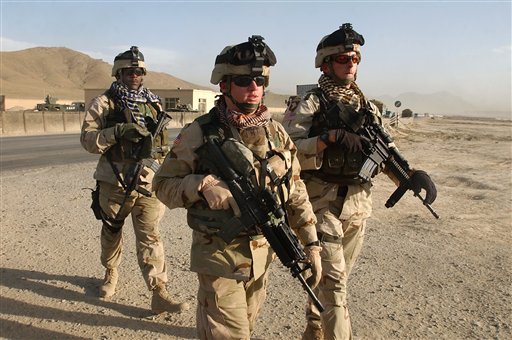
It’s also a plus that, even though we’re only marginally safer today than we were on Monday, September 10th, 2001, we are safer.  Fanatical killers have not turned our friendly skies into an obstacle course of flying firebombs.  There’ve been other serious attacks with major loss of life, but at this point, the murderers haven’t turned our cities into charnel houses, and we aren’t yet under siege.  I still don’t completely trust our strategy, but the bottom line is success.  So far, we’ve been reasonably successful.

Of course, the major difference between then and now has nothing to do with the West’s response to 9/11.  The simple truth is the much-heralded “Arab Street” is outrunning the vision Bin Laden and his boys had for the Arab world.  Their fascist dreams of a resurgent Caliphate are, for the most part, yesterday’s news compared to the revolutions that are rocking North Africa and beyond.  For the first time in a century, there are free exchanges of ideas going on in Tunis, Cairo and now Tripoli.  The ten-year-old salvation Bin Laden had to offer doesn’t mean the same thing to people today who have popular power within their grasp.  The major sponsors of terror — Iran and Syria — are becoming more and more isolated, not only from their own people but from the rest of the Arab world.  Dreams are shifting across the sands of North Africa and throughout the Moslem world.  They’re new dreams, shaped in the last couple of years – if not months.


We in the West need to understand that Moslems are not a monolith, like the Sphinx, stuck forever in one particular pose.  Our world has changed dramatically in the last decade and most of it has nothing to do with 9/11.  So too, the Arab world has changed, and so too, 9/11 didn’t change it.  History does not halt on horrible events or follow a singular course.  No one incident dictates the rest of time.  History has a way of continuing and changing things – here and around the world.  I’m not saying Osama Bin Laden isn’t still a hero to many Moslems, nor am I saying the terrorist threat to us is over.  I’m saying things are different now, and we need to realign our priorities.

Ten years ago, the military response to terrorism was the best one.  It’s still a pretty good option today.  After all, unless your name is Gandhi, you realize that it’s impossible to negotiate with someone who’s willing to pump 50 calibre bullets into the back of a fleeing 10 year old.  We still have nothing to discuss with fanatics who see murder as a legitimate political choice, so we might as well shoot first.  However, here in 2011, we also have a far greater range of ways to deal with terrorism than we did ten years ago.  For the first time since 9/11, we have the chance to stop the bomber rather than just hope to hell we can defuse the bomb.

In the next few years, much more of Bin Laden’s old world is going to be swept away.  We in the West need to be part of that process.  Our assistance is vital to the new world that’s forming across North Africa.  We have a great opportunity to further isolate these fascists (we call them terrorists) who want to hijack not only the Moslem people, but their religion, as well.  If we do it right, 9/11 will change.  To future generations, it will become this generation’s Pearl Harbor; not a horrible beginning to a never ending war but a sad and solemn memorial to a terrible day in history.


People Who Go to Movies – Deserve Better

After years of hanging around this planet I’ve discovered that there actually are two kinds of people in the world.  There are people who watch films and people who go to movies.  They’re as different as pigs and porridge.  It really doesn’t matter where you take your cinematic pleasures — in front of a computer screen, at a funky (God, I hate that word) retro theatre, or on the privacy of your own sofa, etc. — the activity itself is basically the same.   There’s you (obviously) the story in front of you and your willing suspension of disbelief.  That’s it.  And it hasn’t changed since Les Freres Lumiere set up shop at the Salon Indien du Grand Cafe in Paris in 1895.  The major difference (and it’s huge) is the attitude people bring to the experience.

Not to be too judgemental, people who watch films are pompous asses.  They think the only reason anybody ever makes a movie, anywhere in the world, is for their personal interpretation at dinner parties.  And although I’d love to get a few kicks in at those folks, I’m going to leave them alone today.  Besides, they’re all hanging out at a couple of International Film Festivals this week.  Probably, they’re impatiently waiting for some name-brand personality (complete with personal assistant, juggling the Swag Bags) to wander by and pontificate on world poverty.  Incidentally, the loot in those bags could lift South Sudan out of the poorhouse tomorrow given half a chance.  So, go in peace, film watchers, but remember, your day is coming.

On the other hand, people who watch movies are fine, upstanding men and women who have fallen on hard times.  In rapid succession, they have seen the demise of cinematography, film editing, screen writing and acting — all killed off by computer-generated special effects.  There are now only four movies left in the universe.   They are, in no particular order, Chase Me, Girl Meets Boy, Kick Me in the Groin and They Came to Talk.  Of course, some would argue that Aren’t They Greedy Bastards?, Yet Another Cartoon and The Flying Guts of Gore (not Al, the other one) are also movies, worthy of mention.  They’re not.  May I point out that the last hand-drawn animated feature was The Lion King circa 1994 – Shrek and Woody are pixel-powered.  Likewise, everybody knows that The Flying Guts of Gore is not filmed around some stunt double’s horrible disembowelment for cinematic realism.  CGIs (computer generated images) are CGIs, regardless of where they appear.  Furthermore, Aren’t They Greedy Bastards? is really only a sub-genre of We’re All Doomed.  And unless you still believe Gilligan was actually on that island, you know We’re All Doomed is nothing more that thinly-veiled propaganda.  In fact, these days the veils are so thin they’re making guys like Josef Goebbels blush.

What’s been happening here is for the last twenty years, movie goers have become so starved for movies – any movies — they are willing to see the same four, over and over again – and pay big bucks for the privilege.  And contemporary movie makers are shameless about it.  Even as we speak, Hollywood has at least thirty re-makes in the works — not including the ones they’ve already done.  For example, Arthur, Conan, Clash of the Titans and The Karate Kid have already disgraced the big screen, and I’m not going to even mention True Grit.  However, I do hope someday somebody ruins a rehashed Fargo, and we’ll see just how pleased the Coen Brothers are about that.  Re-making movies is becoming the raison d’etre for Hollywood.  Believe it or not they’ve remade Footloose, and Logan’s Run and there’s talk of remaking Blade RunnerBlade Runner! There was even going to be a remake of The Lone Ranger with Johnny Depp as Tonto, but that fell through (probably because they couldn’t get Angelina Jolie to play Lone.)  Eventually the Oscar for original screenplay is going to go to Mack Sennett and Charlie Chaplin for The Little Tramp.

And when Hollywood isn’t regurgitating old movies, they’re overworking the franchise of others.  The minute box office receipts from any movie hit a certain level, hang on to your original merchandise because there’s going to be a sequel, a triquel, and a prequel.  Then, after that they just keep pumping them out.  Things like plot, character and setting simply don’t matter because all they use is the name.  Even the actors get fed up.  Spiderman lost Toby Maguire, Matt Damon quit being Bourne, nobody has a clue who Superman is anymore, and there’ve been enough Batmans (Batmen?) to rival the incarnations of a black belt Buddha.  No wonder he’s all tied up in emotional knots; he doesn’t know who he’s supposed to be — Val Kilmer or Christian Bale.

Of course, the willing suspension of disbelief is strained to the breaking point when actors try to rework characters decades too late.  Harrison Ford and Karen Allen were barely believable in The Crystal Skull, and Lucas and Spielberg are planning an Indiana Jones V.  Think about that!  Plus, they’ve resurrected John McClane for another crack and Die Hard (I hope it’s Die Hard: Once and for all.)  And I never thought I’d say this, but I wish somebody would just kill this current Bond and put him out of my misery.  Jason Statham, where are you?

The real problem is movie makers don’t trust their audience.  They make remakes, sequels to remakes and prequels to sequels of remakes because they think they hear the cash register in known quantities.  They don’t understand that people who go to movies love a good story – witness Slumdog Millionaire.  They might not nerd every detail of the director’s motivation or know all the ins and outs of lighting and camera angles but they do know a ripping good yarn when they see one.   These are the descendents of the people who made Gone with the Wind the highest grossing movie in the world for three decades.  They’re the grandchildren of the folks who went to Bogie movies before he was an icon and the kids of the parents who liked Marlon Brando even after he got fat.  These days movie goers go to schlock ‘cause that’s all there is.  All the good movies are called films and they hide out in Film Festivals.  There’s no chase scene in Lawrence of Arabia, no precocious kid in Casablanca and nobody got chopped to pieces in Cat on a Hot Tin Roof.  All those movies were shown in regular theatres and ordinary people went to see them.  Today, they’d probably be limited to Sundance or TIFF or some other such place.  People who go to movies deserve better than what they’re currently getting and people who watch films don’t appreciate what they’ve got.

Labour Day: A Brief History

As we all know, Labour Day has fallen on hard times as of late.  Canadian commerce keeps chugging along; therefore, many workers (labourers, if you will) have to work on the first Monday of September.  For the rest of us, it’s the last long weekend of the summer — time to heat up the barbeque, cool off the drinks and relax one last time – ‘cause pretty soon the great Canadian winter is going to bring us six months of Don Cherry and Hockey Night in Canada.  However, as you’re sitting with a cold one — fat, dumb and happy the kids are going back to school tomorrow – here are a few historical tidbits to chew on before the steaks are ready.

Legend has it that Labour Day is actually a Canadian invention.  It’s the result of two canny Conservative Prime Ministers and a hard-case Liberal newspaper editor.  I don’t know if the story’s exactly true or not, but I’ve heard it told this way a couple of times, so it’s mostly true.  Besides, it makes a good story.

In 1872, the Typographical Union of Toronto was on strike against The Toronto Globe newspaper – which, by the way, is the great-grandfather of today’s Globe and Mail.  The noted Liberal politician, George Brown, was none too happy about this, since he had founded the Globe in 1844, and it was his paper they were striking against.  He rooted around in his law books for a while until he found some antiquated anti-labour laws and had the strike leaders arrested for conspiracy – 24 of them!  Other labour leaders decided not to take this sitting down and organized a mass rally in Ottawa for the first Monday of September, 1873.  Remember, Canada was less than a decade old at this point, and there was great concern that the shiny new Dominion would not survive.  Socialists roaming the streets, making outrageous demands (a 54 hour work-week, for one) were seen as a serious threat to the orderly conduct of business and to the country.

Enter one, Prime Minister Sir John A. Macdonald, the wiliest politician this country has ever produced.  In 1873, Macdonald’s government was up against the wall.  (Long story short: they’d been taking bribes from railroad companies — really, really big bribes.)  So, where other people saw lawless socialists attacking the foundations of our nation, Sir John saw potential votes and a chance to slap the crap out of the Liberals.  He promised the marchers, as God was his witness, to repeal the anti-union laws.  Unfortunately, the railroad bribes were so big that Macdonald’s government didn’t survive.  Fortunately, his promise did.  The Trade Union Act of Canada was passed in 1874.  Pretty soon, everybody and his brother (pun intended) were legally demanding things like a 54 hour work-week and time to eat their lunch — and those September marches continued.

Meanwhile, in the USA and over in Europe, trade unionists were working away, trying their best to get a few decent working conditions themselves.  Internationally, labour leaders all had the same agenda.  They wanted something a little better than legalized slavery for their people.  Then, if there was any good will left over, they figured a little dignity for the working man would be nice, too.  Most union demonstrations revolved around May 1st.  The thinking was that people would come out and join spring dempnstrations after a long winter.  Plus, the trade union/radical/socialist message could tag team with May Day celebrations already in progress.  After all, May Day stuff — like music and street fairs and dancing around a pole — had always been the practice of common folk.  Obviously, the thinking was sound because the idea caught on.  Today, May 1st is universally recognized as International Worker’s Day — and it’s a legal holiday in over 80 countries!

Back in Canada, the trade union movement was growing apace and in the industrial heartland of the north eastern United States, it was exploding – almost literally.  On May 1st, 1894, labour disputes erupted in violent and deadly clashes in Cleveland, Ohio.  Then, at the end of June, the first large interstate labour action took place: railroad workers in several states staged a boycott in what came to be known as The Pullman Strike.  Just as an aside, American President Cleveland ordered federal troops to put down the strike.  Hundreds of people were injured and 13 union workers were killed.  However, this isn’t important to our main story.

Our Prime Minister at the time, John Sparrow Thompson (never heard of him have you?) saw what was happening in America and around the world and decided to defuse the situation before it got started.  As the Pullman Strike in the US was entering its fourth week, on July 23, 1894, his government declared that the first Monday in September would be a national holiday.  It would be in the tradition of those original Ottawa trade union marches — dedicated to the labour movement and appropriately called Labour Day.*  The more cynical historians say this was simply a move to draw attention away from May 1st.   Whatever Thompson’s motivation, even though Canada had its share of labour pains, it avoided most of the bloody clashes that characterized the international labour movement — situations like the Haymarket Massacre in Chicago in 1896, which started as a peaceful May Day union march and ended up scattered with corpses — over twenty dead.

Labour Day was a small concession to the early trade union movement, but it demonstrated that Canada and Canadians do recognize the importance of ordinary working people.  So, if you get a minute between long weekend activities, lift your glass to the men and women who gave us this holiday: there were a lot more of them than George Brown, John A. Macdonald and John Thompson.

*President Grover Cleveland also created an American Labor Day less than a month later.