
Seven Deadly Words You Should Never Say

Way back in January (seems like a lifetime ago, doesn’t it?) the Canadian Broadcast Standards Council banned Dire Straits’ 1985 song, “Money for Nothing” from Canadian radio because somebody in Newfoundland took offence to the word “faggot.”  On Monday, August 29th (that’s seven months later, if you’re counting) the CBSC came out with its final report.  The final report established two things — once and for all.  One, comedy in Canada is not dead, and two, it’s okay to play “Money for Nothing” again.  Apparently, either, a seven month absence from the public airwaves can etymo-cleanse even the most grievous hurt out of 25-year-old song lyrics or Dire Straits’ use of “the other f word” (as the CBSC called it) wasn’t all that offensive in the first place.  As they say on NFL broadcasts, “You Make the Call!”

It strikes me that seven months is a bit much to wait for a ruling.  After all, the song itself, from opening riff to final fadeout, is less than five minutes long.  However, so be it: Canadian justice isn’t the swiftest thing on the planet.  It also strikes me that it’s terribly odd that last week “the other f-word” was an instrument of discrimination and oppression but today “faggot” is just another word we don’t use in polite conversation.  Again, so be it.  Words, like water, have a way of finding their own level.

For example, when I was a lad, comedian George Carlin came up with a list of “The Seven Words You Can Never Say on Television.”  When he did say them, not on TV, but at a festival in Milwaukee, he was arrested.  These were deadly words indeed — in my day.  Fortunately, it’s no longer my day, and Carlin’s list is now commonplace on TV, showing up on sitcoms, sporting events, the Academy Awards and even popping out of the mouth of the Vice President of the United States – when he wasn’t looking.  Not so deadly now, are they George!  To be fair, Carlin actually researched (“plagiarized” is such a hard word) his deadly words from Lenny Bruce, a comedian from the 50s and 60s.  Obviously, words have been offending people for some time now.
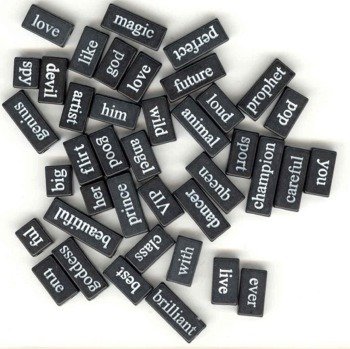
In that spirit, I propose (for the 21st century) a new List of Seven Deadly Words that should not only be banned from television; they should be taken out and shot.  To say they offend me is like saying the Black Plague was an annoyance.

Number 7 – It’s a golden oldie but it’s still just as vapid now as the day the first Valley Girl uttered it in a San Fernando mall.  “Whatever” was originally a term of dismissal, but it has now become an ever-ender tagline.  For example, people go to the store or whatever; they play tennis or whatever.  They eat, drink, give birth, sing songs and have their appendix out — then “whatever” immediately after each activity.  I have even heard “He died or whatever.”  Just a point of interest here; there is literally no whatever after the Grim Reaper takes your pulse.  “Whatever” is turning life into a series of vague comings and goings that drift around without definition or purpose.

Number 6 – “Going forward” (sometimes “moving forward”) is supposed to convey that sense of purpose that “whatever” has already abandoned.  It’s a tagline also, meant to put a positive spin on a mealy-mouthed statement — as in “We’re going to review our options, going forward.”  What this actually means is “The decision’s been made, and I don’t want to get into a big argument right now.  So shut up and forget about it.”  The problem is, in reality, everybody is already going forward; that’s what humans do.  The minute we go from horizontal to vertical in the morning, we are, by definition, going forward.  That’s why our eyes are in the front of our heads, for God’s sake.  We don’t have to announce it like we’re doing something special.

Number 5 – This is a compound word whose parts are used interchangeably and all have the same meaning – nothing.  “Empower/engage/embrace” was originally used by politicians who hadn’t read the briefing papers and didn’t want to look like dolts on national TV.  This led to some really goofy statements like “We need to engage the youth vote.”  First of all, you can exchange either of the other two parts of the word and not change the meaning (Try it!)  Secondly, the sentence doesn’t mean anything, anyway.  Unfortunately, the word escaped into the general population, and now ordinary people are “embracing /empowering/engaging” themselves all over the place.  It still doesn’t mean anything, though.  So, the next time somebody is “engaged/embraced/empowered” by Sheb Wooley’s philosophy of life or some other such nonsense, ask them why – or, better still, how.

Number 4 – Another Valley Girl classic that snuck into the language, “totally” is a junk word additive that nobody needs to use –ever.  Perhaps at one time, way back in Ridgemont High, it had some emphatic power, but today there is no difference between “I finished the painting” and “I totally finished the painting.”  Nobody even hears the word anymore; not even when it’s phrased in the negative, as in, “I totally didn’t finish the painting.”  Oddly enough, this doesn’t mean I never started the painting – which, of course, it should.

Number 3 – It’s “amazing.”  Written down, it looks just like every other word, but in spoken English it takes on a proverbial whole new meaning.  When spoken “amazing” has a drawn-out second “a,” and altering the drag alters the meaning.  “Amaaazing” is completely different from “amaaaaaazing” although it really doesn’t matter because everything that walks, runs or crawls is now “amazing.”  Chairs, windows and all other inanimate objects are “amazing.”  Meghan, Bryce and the neighbour’s cat are amazing, as well as a road trip to Brazil.  It all depends on that second “a.”  Eventually when we see the rings of Saturn — in person — “amazing” will last for 6 and a half minutes.

Number 2 – We’ve finally accomplished what George Orwell wrote about in his novel 1984.  We’ve created an all-purpose word that is the answer to all questions and the response to all statements.  “Awesome” is becoming the word we say in reply to everything.
“Good morning.”  “Awesome!”
“Your sister is a terrorist and they’re taking her to Guantanamo.” “Awesome!”
It’s also means yes: “Do you want to go to the hockey game?”  “Awesome!”  However, it never means no.  It can mean good, but never bad or indifferent.  In fact, it’s never negative, at all.  “The storm was awesome.” now means there was a lot of wind and pretty colours.  It doesn’t mean Mother Nature’s destructive power can kill people.  “Awesome” now lives in that happy, happy fairyland where everybody gets a rainbow.

And finally, Number 1: the most offensive word in the English language is “like.”  Eventually, every sentence we speak will begin with “like.”  “Like” will be inhabit every phrase we utter.  “Like” will become part of everything we do and every observation we make.  We’ll never actually do or see anything sharply described again – it will always be just slightly similar.  “I’m, like, going skating.” Or “He was, like, standing there.” Or “He was, like, standing there while I was, like, going skating.”  If this crap keeps going “like” will kill clearly defined speech and become the modifier for everything we do, feel or see.  It’s poised to strangle the life out of our language and the beauty and precision of the English is on the verge of dying a slow and agonizing death.

There are plenty of offensive words out there, and thoughtful human beings don’t use them; if nothing else, that’s just good manners.  The Polite Police are there for the yobs, who haven’t got a clue in the first place.  However, it seems perfectly acceptable for otherwise reasonable people to systematically abuse our language.  They have cut the guts out of it, without a second’s hesitation.  This offends me, and let me tell you it’s the canary in the mind shaft, warning us about just how vague and jellied our lives have become.


Shouting in Frustration about Back-to-School Stress!

The problem with writing blogs is you can’t shout.  All the words on the page get the same weight; none of them stand up before God and everybody, throw their heads back and holler, “What the hell is going on here?”  So, all you can do is delicately present what you know to be true and hope at least one person pays attention.  It’s frustrating work, but somebody’s got to do it.  Either that or we’re all going to end up sliding down some cosmic bunny hole and the Red Queen’ll be calling the shots.  This is one of those times when something is so messed up I just wish I could scream from this page.

What I am about to tell you is absolutely true.  No sane person could possibly make any of this up.

Recently, Angus Reid, those annoying people who always phone exactly at dinner time, conducted a poll.   They wanted to know — and many people told them — if kids were getting anxious about going back to school.  Easy question, simple answer: “My kid’s eight.  How hard can this be?”  Not so fast!  Apparently, 42% of children are not only anxious about it, they’re stressed right out.  Forty two percent!  That’s nearly half!  And that’s the national average!  Where I live, the percentage goes up to 47!  I’m running out of exclamation marks!!   Can you believe this?  I have no idea about the methodology of the poll — who responded, what the questions were etc.  However, I do know one thing, without even looking: Angus Reid didn’t talk to one single kid.  If they had, that 42% would have dropped to practically nothing – 4% max.   And that’s what makes this poll so scary.

Here’s what’s actually going on.  Angus Reid talked to parents and nationwide, 42% of those people who answered the online survey have no business having children.  They’re unfit parents.  Either that or they’re so ego-blasted on 80s entitlement that they don’t realize those munchkins who show up for breakfast every morning are their responsibility — they’re not just there to make adult life miserable.  Regardless, somebody should call social services immediately because these parents are not doing their job.  Let me explain.

First of all, ordinary kids do not come by stress naturally – especially in North America.  They just don’t.  Yes, I’m sure there’s anecdotal evidence to the contrary.  There’s probably some little person out there somewhere whose dad is a crack addict and whose mom’s doing covert ops in Afghanistan or something, but that’s not the norm, and that’s my whole point.  Stress comes from extraordinary circumstances.  Normal, everyday life does not cause stress.  If it did, we’d all be renting condos in the Valley of the Loons.  Besides (and I’m pretty sure about this, also) kids haven’t bought into the extra curriculars of life yet — things like mortgages, car payments, a rat-faced, inconsiderate boss or an idiot spouse who answers surveys.  They only get stuff like that from parents who are contagious.  These are adults who haven’t made the simple connection that kids can’t fully handle a lot of information yet.  They haven’t figured out there are ways of sharing life’s little difficulties with a nine-year-old — without freaking him out.  Unfortunately, most inhabitants of the 21st century think stress is a natural condition.  So, when it comes to their children, they treat it like an accomplishment that should be passed along.  Stress is taught in the home like sharing your toys or tying your shoes.  And when it shows its ugly little head, it’s rewarded with lots of close personal parental attention.

Next, kids go to school.  That’s normal.  It’s what they do, and they do it for years.  It’s like the cycle of the seasons to primitive tribes.  They measure their little lives by it.  Every September is a rite of passage – another rung in the ladder to adulthood.  I know people who haven’t been near a school in a generation, but the rhythm of their childhood is so ingrained that they still think of Labour Day as a kind of Everyman’s New Year.  And here’s another newsflash: despite what they’ve been conditioned to tell you, kids love it.  Why?  ‘Cause kids are sponges.  They soak up everything around them and process it.  Everything is new and exciting.  Electricity and magic carry the same weight with them because they don’t know the difference yet.  Every piece of knowledge is a mighty discovery.    And there’s no better place to quench that thirst than at school.  It’s the one place whose sole purpose is to explore the world and get in touch with all kinds of new stuff.  This isn’t just confined to the classroom, either; the socialization of recess or lunchtime friendships are just as important.  Children keep this sense of wonder for years — until it’s kicked out of them by inept and preoccupied adults.  Find a kid who says, “Been there; done that.” and you’re doing something wrong.

Finally, kids are tough little beasts.  They’re made to withstand the harsh realities of growing up.  Here’s how it goes: take away an adult’s most cherished dream and you run the risk of destroying their ego, their joy, their purpose — for life.  On the other hand, tell a kid that Santa Claus is…well… kind of a spiritual thing, and it might set them back for a day or two but pretty soon they’re on to the next adventure.  Kids face the Santa Claus type discovery over and over, year after year, and the vast majority of them shake it off and keep on moving.

Parents who see signs of back-to-school anxiety in their kids are looking in the wrong places.  Either that or they’ve already conditioned their children to be timid and needy.  Kids naturally look forward to a new school year just because it is new: it’s exciting, it’s more and different and part of that bigger life they’re growing into.  Parents who don’t understand this and foster it are raising a generation of young people made of spun sugar, so breakable that every bump in their future mundane lives is going to be a setback, an injury or an occasion for angst and foreboding.  These parents are stealing the wonder from innocent lives and they ought be ashamed.  I’d like to grab that 42% by the collective collar, get right in their face and shout, “Stop it!” but I can’t.  I just wish I could.

Group Think: A Slow Motion Mob

When I was a kid, long before Disney rewrote Hamlet into The Lion King, there were African nature programs.  They were all pretty much the same.  They featured one or two hairy somethings, with human personalities, waddling around, having adventures.  At some point, before the first commercial, an anonymous zebra would get eaten — just to prove things were serious.  Then the creature, whoever he was, would get into a couple of close scrapes himself.  In the end, however, the hero would survive, learn the tricks of the trade, and a new crew of little hairy somethings would emerge from the den.   Basically, it was the circle of life, Grasshopper — with a jugular and some big, ugly teeth.

The one I liked the best, though, was the one about the migration of the gnus (wildebeests, if you’re South African.)  It still wows me that one minute there’s this big herd of gnus, just hanging out on the Serengeti.  Then, one of them turns to his buddy and says, “Man, this place is totally lame.  I’m going south.”  Suddenly a couple of million herbivores are on the move.  Without thought or discussion – they’re just going — and dragging zebras and antelope with them.

The group mind is fascinating in its simplicity.  I’ve seen this happen with people.  You’re standing in line, waiting for a movie or a bus, and one guy shuffles a half-step forward.  Everybody in the line suddenly perks up and readjusts (even the people in front of him, where it doesn’t matter.)  Agitate that line and the people will start to bunch up towards the front; irritate them, and they’ll start banging on the door; piss them off, and you’ve got a mob.  It’s all just group think accelerated.  More importantly, though, the reverse is also true.  Group think it’s really just a mob in slow motion.

The problem with a mob, regardless of what speed it’s travelling at, is it doesn’t think.  You’ve never heard of a lynch thoughtful discussion.  When somebody’s about to swing, it’s always a mob who’s holding the rope.  Those townspeople going after Frankenstein with torches and pitchforks aren’t about to listen to reasonable arguments for and against; they’re out to put a hurtin’ on somebody – or something.  The crowd screaming for the blood of Christ didn’t care if they had to suck up to the eternally-hated Romans to get it, and flogging wasn’t going to be good enough because they’d already bought the hammer and nails.  A couple of centuries later, everybody’s sorry about that (After all, the “Do onto others…” thing is a pretty cool philosophy) but at the time, crucifixion seemed like a grand idea.  But group think isn’t just about frustration and shouting and spur-of-the-moment homicide.  It runs deeper than that.  Group think bends the rules of reasonable discussion.  It turns secular examination into religious fervour.

The very best example of this?  A couple of hundred years ago, in September, 1793, Robespierre and some of his amis were sitting around Paris with a revolution on their hands.  They formed the Committee of Public Safety and started chopping off heads.  By the time they were done, somewhere between 20 and 40 thousand people had been whacked; ironically, most of them peasants.  What we now call The Reign of Terror, ended only when it began to eat its own and Robespierre himself had to kneel before Mademoiselle La Guillotine and lose his head.   But for ten months, the Committee murdered people (There’s no other way to say it) relentlessly, day after day – and here’s the kicker – in full view, and with the public’s approval.  This is group think at its worst.   This isn’t the flare of a mob breaking innocent windows.  It’s the body politic, so intoxicated with its own righteousness that it calmly, carefully, convinces itself that it holds the moral authority to anoint the saints and punish the sinners.

When group think controls the agenda of a nation, honest people are fooled into believing the words of the demagogue.  They abandon rational thought for the fears and tears of emotion.  They hold no reference to reason but follow the wild-eyed cries of the crowd, metaphorically rending their garments.   As the tumult of the time builds, otherwise discerning people follow the loudest voice.  The slow and thoughtful sounds of logic are shouted down by misplaced passion.  Thinking itself staggers under the weight of the tyranny of thoughtless, unexamined belief.

Here in Canada, we maintain our good name in the world (despite what some would tell you) precisely because we are a discerning people.  We do not rush to adorn our dead with saintly shrouds or hurl our reason on the funeral pyres of our heroes.  We are not swept away by the tenor of our times.  We do not chase the worship of every newly-minted Golden Calf.  We are a slow, deliberate people, loving, hopeful and optimistic; and although we need to be reminded of that sometimes, we are not so brutish that these ideals have eluded us.

But mostly Canada’s good name in the world rests on the fact that we understand that we’re all in this together.  We know that the secrets of our future are not the exclusive province of one man or one group or one philosophy. We are not the puppets of carefully crafted presentations.  It is not in our nature to build pedestals for heroes or shrines for saints, so when we do, we risk being fooled by shimmering platitudes; truisms that seek to exploit our good intentions.  They would have us forsake our reason to blindly follow the single most persistent voice. When we do that, we are nothing more than a slow motion mob — no matter how well-meaning.