Christmas: A Victorian Invention

Obviously, Christmas, as we know it, started quite literally in the year dot.  Like it or don’t, the birth of Christ is the single most important event in the history of Western civilization.  Here in the 21st century, we continue to celebrate the day as a religious, secular or “hell of a good time” holiday.  It’s a tradition.  However, it’s a relatively new one.  Our celebration at Christmas started accidently, in the1840s, when these two events coincided.  First of all, an English author published a novel; secondly, Queen Victoria married a German.  Without these two isolated events happening at just the right time, we’d all be sitting around December 25th burping up turkey and looking for batteries — for no apparent reason.

When Queen Victoria ascended the throne in 1837, there was a feeling that this was the beginning of a new age in Britain.  The Napoleonic Wars were long over and mostly forgotten, and the world was enjoying a time of relative peace.  The industrial revolution was producing not only a new prosperity but also a new middle class who had both money and leisure.  They could enjoy things like travel, family life, and even hobbies such as reading for pleasure.  Also in 1837, a relatively unknown author named Charles Dickens published a newspaper serial called The Pickwick Papers.  Within about 5 chapters, he had suddenly become the J.K. Rowling of the 19th century.  The new English middle class fell in love with Pickwick.  Soon, people on both sides of the Atlantic were lining up to get the latest instalment of his adventures.  One of the most enchanting episodes in The Pickwick Papers was a fanciful description of a Christmas festival.  Christmas was undergoing a bit of a revival at the time, and Dickens’ highly fictional description gave people something to emulate.  It was very much the same as when people today talk and act like their electronic friends on TV.
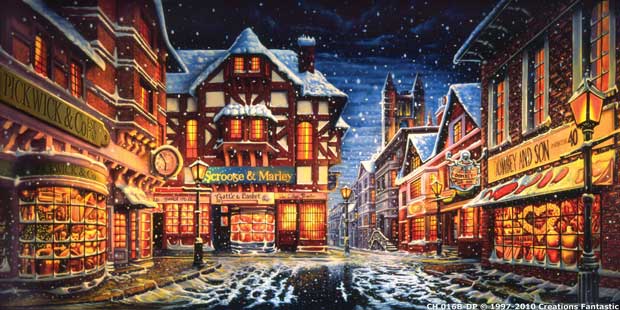
For the next couple of years, Charles Dickens kept himself busy.  He published some very successful novels — Oliver Twist and Nicholas Nickleby, among others.  Then, like most successful authors, he decided to shoot his mouth off.  He ran afoul of his American audience by advocating some rather radical ideas like universal copyright (so those damn Yankees couldn’t steal his stuff) and the abolition of that quaint American custom of slavery.  Suddenly, he was losing some pretty valuable customers on the other side of the Atlantic.   He wanted to get them back, so he began writing a series of books he described as, “… a whimsical sort of masque intended to awaken loving and forbearing thoughts.”  He succeeded.  In 1843, he published A Christmas Carol and the world changed dramatically.  Once again, both sides of the Atlantic went crazy for Charles Dickens.  Scrooge, Cratchit and Tiny Tim were more popular then, than Edward, Bella and whatever the kid’s name is are today.

Everybody wanted to celebrate a traditional Christmas the way Dickens described it because — before Dickens wrote it — nobody actually kept Christmas that way.  He made it all up.  He took several traditions that were already there and put them together in a stylized setting.  It was fiction.  Plus, Dickens didn’t just write A Christmas Carol; there were five books in the series.  Every time our Victorian ancestors turned around, there was Charles with another feel-good Christmas story.  It must have been like getting beaten over the head with a rainbow.  By the time Dickens was done, Christmas was everywhere.  You couldn’t get away from it.

Meanwhile, in 1840, Queen Victoria married Prince Albert of Saxe-Coburg and Gotha, her German first cousin.  Albert showed up at Buckingham Palace with all his German sensibilities intact, including some very noticeable Christmas traditions — like decorations and the tannenbaum or Christmas tree.  Christmas trees had been around for some time, but it wasn’t a common practice in England to cut down a tree and haul it into your house.  Any trees that did get cut down around Christmas were normally thrown into the fire as Yule Logs.  However, the popularity of the young, good-looking monarchs was such that, when Victoria and Albert appeared with their children in front of a Christmas tree, in The London Illustrated News, Christmas celebrations became uber-fashionable.

The social ladder now had a new rung, and people all over England and America began decorating their houses at Christmas, just like they assumed their aristocratic betters were doing.  Thus, the height, breadth and weight of the Christmas table one set became society news and reason for gossip.  Everybody wanted to know what Jenny Churchill was wearing or what the Astors served for dinner — so they could do it, too.  It was Entertainment Tonight – only with bonnets and bustles.  Christmas was not only everywhere; it was trendy.  The result was that Christmas became the #1 holiday of the year — and has been, ever since.

Today, our Christmas celebration is surprisingly similar to that of our Victorian ancestors.  Of course, there have been refinements along the way.  In 1843, Horsley and Cole, a couple of bored Englishmen, invented Christmas cards.  Saint Nicholas was turned into Santa Claus by Thomas Nast and Coca Cola.  At some point, religious hymns became “I’m Dreaming of a White Christmas” and “Jingle Bell Rock.”  Add we’ve added Rudolph the extra reindeer and that stupid Little Drummer Boy (who was put on this earth just to annoy me.)  However, it’s basically the same Christmas they would have had a century and a half ago.  So, when you push your chair back from the table and look at the beauty of your own personal Christmas, take a nanosecond and thank Charles, Victoria and Albert, who invented it for you.
Christmas at the Movies

Way back in the dim reaches of time, people went to the theatre to see Christmas movies.  In my time, most of us saw the classics on television.  Then, of course there were VHS tape, DVDs and now downloads.   Regardless, there is something very Christmassy about settling in on a long winter’s night with popcorn and Pepsi (or whatever) and watching a movie you’ve seen at least a hundred times since you were five.  It says Christmas — just as much as Santa, the elves and reindeer.

Despite what the Internet will tell you, there is no be-all/end-all list of Christmas movies; everybody’s Top Ten is slightly different.  For example, I have a friend who is pretty much normal.  He’s a good husband and father, pays his taxes and keeps a somewhat traditional Christmas.  However, his favourite Christmas movie of all time is Jingle all the Way.  Go figure!  The point is the mark of a good Christmas movie is totally subjective.

Hollywood has made literally hundreds of Christmas movies.  Some of them are extra special and some aren’t fit to be shown on Khatfoodistan Regional Airlines, but they all fit into three broad categories.  They are the retelling of Charles DickensA Christmas Carol, The Christmas Reboot and A Funny Thing Happened on the Way to Christmas.

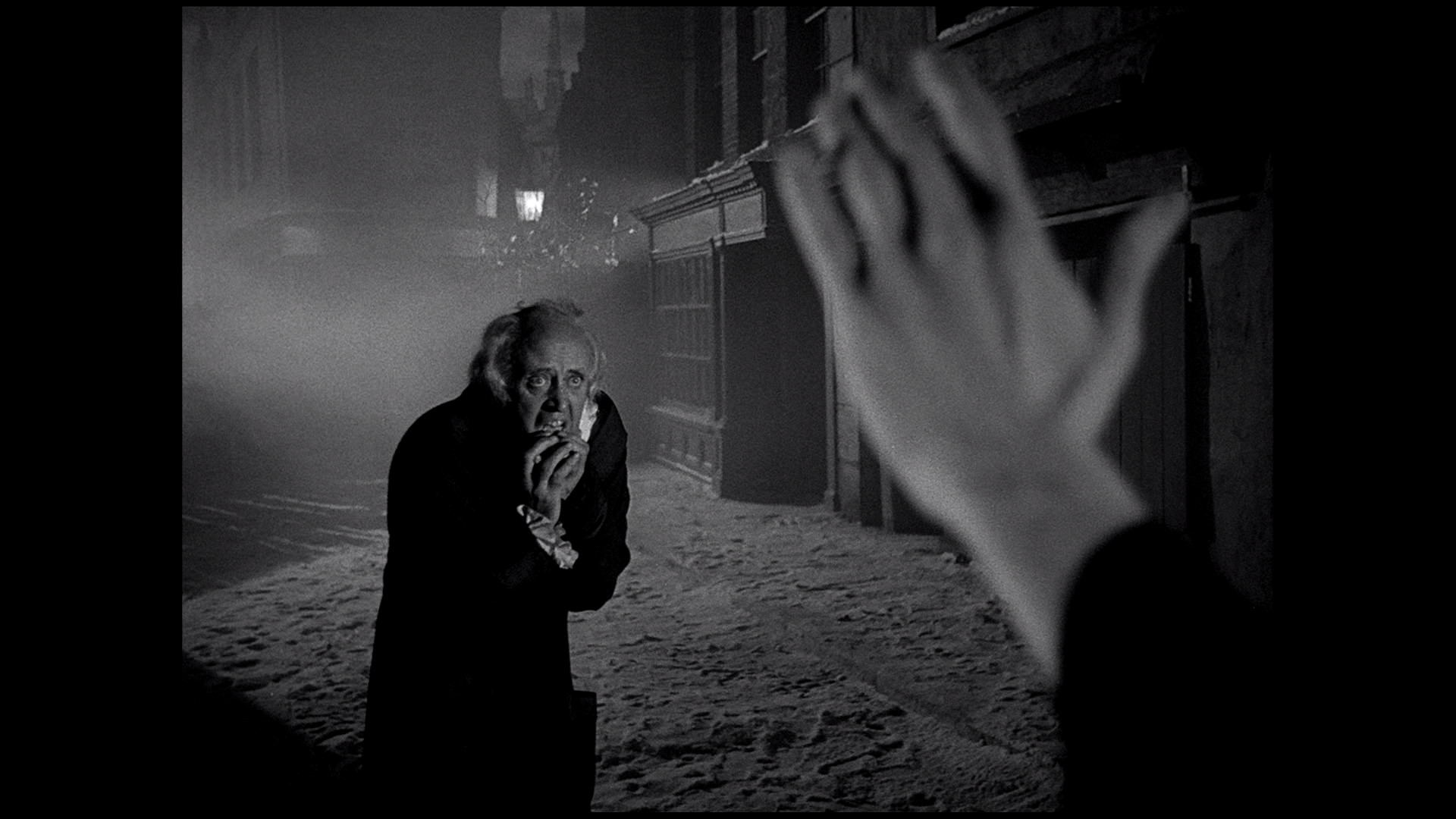
After the nativity story itself, A Christmas Carol is the definitive tale of Christmas.  Over the years, half of Hollywood has taken a crack at retelling it.  Scrooge has been played by Reginald Owen, George C. Scott, Bill Murray, Michael Caine (with a troupe of Muppets) and even Jim Carrey (in an animated version.)  These are all decent renditions (and there are probably a few I’ve forgotten) but the very best version was filmed in 1951 and starred Alastair Sim as Scrooge.  Why?  First of all, it’s black and white.  This makes it shadowy and grim, almost sinister, and it gives some verisimilitude to Victorian London.  (The rag-and-bone scene is especially Dickensian.) Secondly, it shows the slow decline of Scrooge, and with him Marley, from young, bright-eyed clerks into the hard, penny-pinching misers they become — figuratively forging the chains that Marley is dragging through eternity.   It softens our attitude towards Scrooge: in a sense we start cheering for him.  And finally, the redemption of Scrooge is a complete transformation — not just Ebenezer with a grin on.  When Scrooge is sitting on the stairs with Mrs Dilber and gives her a sovereign, he is serious about it.  When he goes to his nephew’s house, he’s hesitant, unsure of his reception.  When he confronts Cratchit back at the Counting House he calls him Bob.  The change in Scrooge is real, and we applaud him for it.  This is perhaps the best movie version of A Christmas Carol with only one flaw.  In the bedroom scene, when Scrooge wakes up to discover he hasn’t missed Christmas, as he’s jumping around, you can clearly see the film crew in a mirror on the wall.

There are a ton of Christmas Reboot movies.  The cynical among us would say that finding the true meaning of Christmas is a national pastime in small-town America.  Of course, Christmas is all about a rebirth of faith, but the problem with a lot of the Christmas Reboot movies is they are just not that believable anymore.  For example, in The Bishop’s Wife (1947) I simply do not believe that Loretta Young would throw over guardian angel Gary Grant for pain-in-the- ass David Niven.  I mean, really!  Would you?  The very best of the Reboots are, of course Miracle on 34th Street, Christmas in Connecticut and (as much as I hate it) It’s a Wonderful Life.  But there are a few other films that get overlooked.  One of them is Elf.  As Dorothy Parker once said (about Katherine Hepburn) Will Ferrell’s acting talent runs the gamut from A to B, and he uses every ounce of it in Elf.  Even if you haven’t liked a thing Ferrell has done since Saturday Night Live you’ll have to admit Elf is a classic.

There is no end to the great A Funny Thing Happened on the Way to Christmas movies.  The only question is, depending on your sense of humour and sensibilities, which ones are better than the others.  At the top of the heap are A Christmas Story, where Ralphie finally gets his Red Ryder BB gun and National Lampoon’s Christmas Vacation, which is one of the funniest movies in history.  These two are head and antlers above all the rest and are required viewing in comedy school.  After that, it’s up for grabs.  Some people like The Santa Clause, although the sequels are getting a bit old.  Some people like Christmas with the Kranks.  Some people even like Bad Santa.  It all depends on your taste.  One of my personal favourites is The Ref, which is hard to summarize but extremely funny.

Of course the Christmas season would not be complete without White Christmas.  This movie is so synonymous with Christmas it stands alone as the single finest Christmas mood movie ever made.

So, the Top Christmas movies on my list are (in no particular order — yeah, right!)

White Christmas
A Christmas Carol
A Christmas Story
National Lampoon’s Christmas Vacation
A Child’s Christmas in Wales
(very hard to find)
Elf
Prancer (just ‘cause it’s cute)
The Ref
The Polar Express

And I’m saving #10 for Harold and Kumar.

Christmas: A TV Guide

To put it politely, network TV is a vast, vacuous wasteland.  For every good program, there are at least fifty stinkers.   And don’t let any TV buff (read trivia nerd) tell you any different; it’s always been this way.  If there ever was a Golden Age in television, it was heavily camouflaged.  Network TV has always followed a very simple system: find something that works and repackage the hell out of it.  Then, when, everybody is up to their eyeballs in bored, find something else, and do it all again.  For example, right now we’re in the midst of crime shows and insult comedies, but as the doctor said to the kid who swallowed the quarter: “This, too, shall pass.”  The problem is there is one theme that never gets old – Christmas – and network TV’s been working that dead pony since David Sarnoff met Milton Berle.  Don’t get me wrong: there must be some terrific Christmas television out there, but, like Santa’s elves, it’s almost impossible to find.  So, in the spirit of the season I’ve put together a bit of a guide to save you tons of time.

Right off the bat, Made for TV Christmas movies are crap.  These low budget formulas are always filmed in Toronto or Vancouver to save money.  They usually feature a never-was actor with name recognition (Tom Arnold comes to mind) and somebody who looks so remarkably like Mary Steenburgen that sometimes she is.  The characters are handpicked from the cliché basket.  They always amount to the usual suspects, with a few variations: the gruff but kindly old person, the nasty bastard, the cute kid who’s either losing or lost faith in Christmas, the parent too busy to notice and the love interest who pops in and out like a malfunctioning Christmas bulb.  The plot works these stereotypes unmercifully.  Normally, either Dad or Mom is dead — sometimes both — so the remaining parent or guardian can be either poor or overworked.  The kid is a misfit (either new school or bully bait.)  The old person’s life coach is Ebenezer Scrooge, and the love interest has been cloned from the world’s finest cardboard.  Of course, the Christmas crisis, whatever it is, (actually, by that time, nobody cares) is resolved in the end and the kid grows up to be the love interest in the sequel twelve years later.  Don’t bother with these wastes of digital space.  You’d be far better off getting your popcorn and Pepsi™ and watching the Holiday Fireplace.

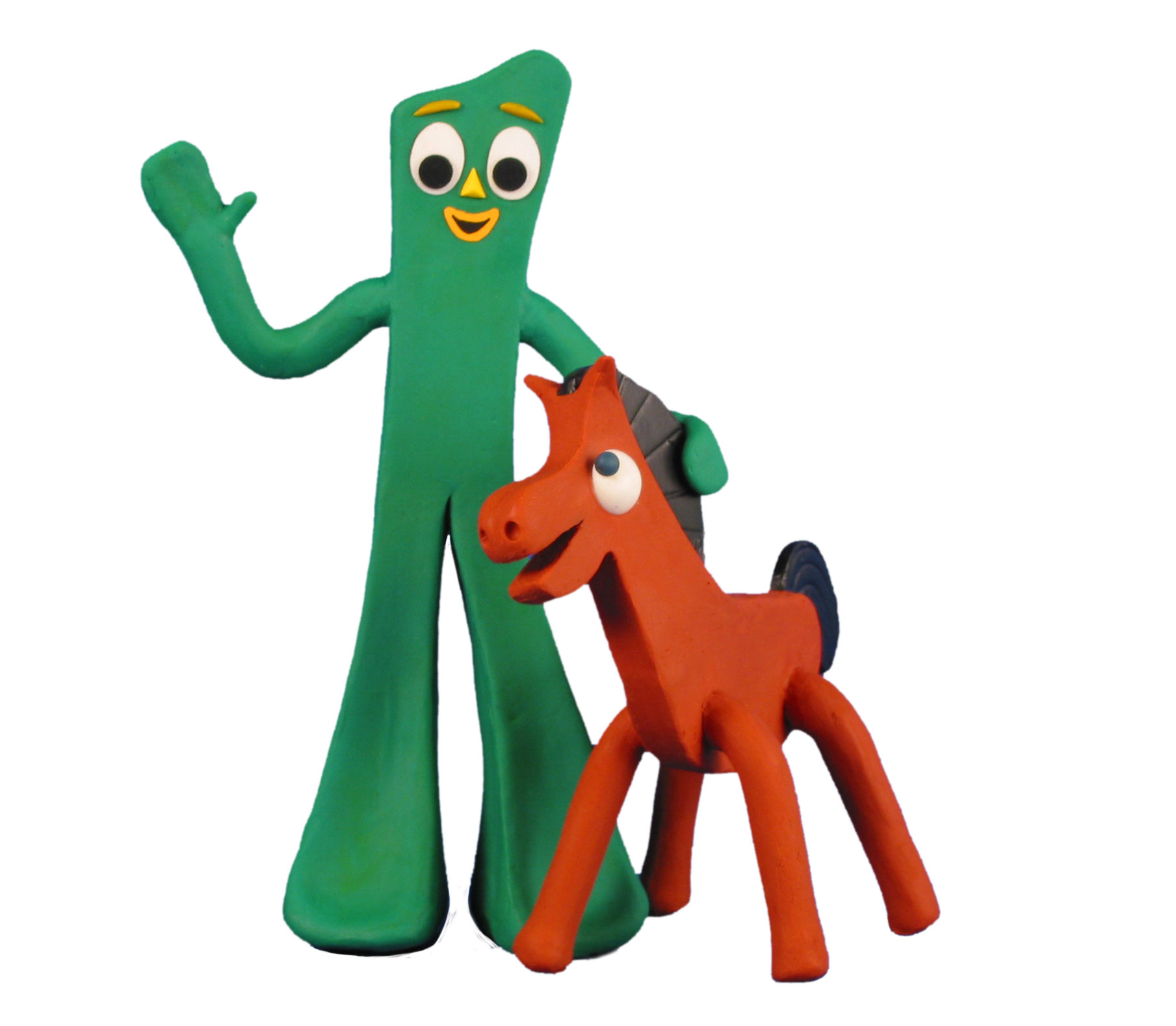
In the same vein, every year there are a load of rerun Christmas TV specials.  The networks call them classics and play them over and over.  Keep hitting the remote because the only ones worth watching are How the Grinch Stole Christmas (the original from 1966, not Jim Carrey’s fiasco) A Charlie Brown Christmas and the ones you watched as a kid.  The rest were made at the high water mark of Pokey and Gumby fame.   And although claymation may stir the hearts of artistic aficionados everywhere, to ordinary folks it’s like encountering a mime.  Yeah, yeah, yeah!  We all know it’s an art form, but I don’t want it anywhere near me.  So just download the ones you like and forget the rest.  There is, however, one notable exception which isn’t strictly network TV (PBS via BBC, actually) and it stands head and turkey above the rest.  It’s Merry Christmas Mr. Bean, and if you don’t understand the previous reference, you have got to watch this.  It is hilarious!

Which brings us to the Christmas Special, itself.  Over the years, the network TV Christmas Special has lost all its appeal.  Way back in the day, once a year, Andy Williams or Bing Crosby would haul out the winter wonderland backdrops and tuck into a few Christmas carols.  There were fake snow and lame jokes and either a puppet or a longhaired singer “for you young people.”  There was a guest star, possibly a comedy skit and one sombre “Silent Night” or “Little Town of Bethlehem.”  Then everybody joined in at the end to sing “We Wish You a Merry Christmas” and wave goodbye as if you were the one who was leaving.  The thing was (and this is what made them brilliant) it looked like Andy or Bing or whoever was actually having a good time.  Even though they probably taped the thing in August, it seemed, for all the world, that those people were enjoying themselves at Christmas.  They allowed us the willing suspension of disbelief.  It was sugar plum television.

These days, there’s a sharp edge to the Christmas Special.  The comedy is just slightly cruel, and it doesn’t look like anybody’s having any fun.  They go through all the motions and sing the right songs, but somehow they never step out of their celebrity personas.  You know it’s a Christmas Special.

I suspect there are still some good Christmas Specials out there, but I no longer have the patience to sit through the mountains of junk to find them.  And that’s the problem with network TV.  It’s loaded up with junk, and by the time you hear about the good stuff, you’ve missed it.  In the end, if I’m going to spend time with my TV at Christmas, aside from the few, tried and true, I’ll probably just watch a movie.

Friday: Christmas: A Guide to the Movies