Television Commercials: A Misunderstood Art Form

I’m probably the only person west of Manhattan who likes television commercials.  That’s not strictly true: a long time ago, I met a whole pile of people in LA who built them.  I don’t know whether they liked them or not, but they certainly had a lot of fun making them.  I was actually in a commercial, once, way back when.  It was a horrible, boring ordeal.  I was Boy #4, who, with all the other young people, raised a beer bottle in the air and smiled.  I never saw the finished product.  (We didn’t have a television machine at the time.)  Actually, the only thing I remember clearly is getting totally pissed off with Boy # Whatever, who, after a hundred takes, still couldn’t grasp the simple concept: label out!  I’m not sure, but I think he went on to become a megastar as a TV detective.  Boy #4 worked hard that day.  His arm and smile muscles were sore from raising that bottle a million times, but it beat picking tomatoes out in the sun and turned him off beer for a while.  Anyway, despite the experience I like television commercials.  I think they are the most misunderstood art form of our time.

The root of the huge prejudice against TV commercials comes from the archaic notion that they are insidious, subliminal messages, forced on an unsuspecting public who then have no choice but to clamour off their sofas and conspicuously consume things.  This was a cute idea back in the Wonder Years, when Corporate America was the only bogeyman, and the root of all evil – real and imagined – was capitalism.  Unfortunately, many people still cling to this argument, even though we now have empirical (waistline) evidence that proves North Americans are not getting off that sofa, come hell or high water – no matter how many times they’re told to Swiffer.   In actual fact, ever since Uncle Miltie brought his transvestite act to Main Street America, via NBC, TV commercials have been an integral part of our electronic world.  They’re just as big a piece of our cultural heritage as the programs they sponsor.  However, prejudices are hard to break down, but if you keep an open mind, I’ll try to show you how it works.
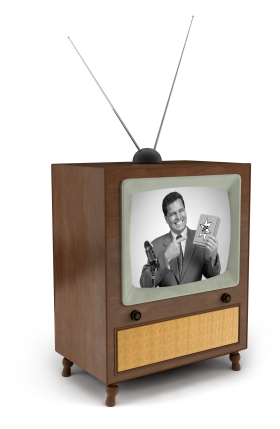
Viewed with proper perspective, TV commercials are ingenious little stories that provide tons of information.   The writer, director and cast set the scene, introduce the characters, establish the conflict and offer the resolution — all in less than sixty seconds.  I know people who can’t tell a Knock-Knock joke in that time frame.  Plus, commercials cover the horizon from high drama to slapstick comedy, all within a prescribed storyline dictated by the product.  They have to appeal to the widest possible audience, and they must, regardless of whatever else they do, be memorable.  The mark of a good commercial is not whether it makes us laugh, cry, happy or annoyed; it’s whether we remember the name of the product or not.  In fact, many very good commercials fail because, despite their exemplary qualities of art on film, nobody remembers what they were made for.  The people who make TV ads work in a very tight box that most film makers would throw tantrums over.  Yet they produce films that remain in our consciousness long after the sitcom laugh tracks have faded into obscurity.  “They’re grrrrreat!” from Tony the Tiger™ has outlasted anything that George Reeves/Clark Kent/Superman ever had to say.

In essence, television commercials are little itty-bitty movies.  The only difference between them and the films of people like Ron Howard, Michael Moore or Oliver Stone are a couple more hours of digital tape.  Good movies and good commercials work exactly the same way.  They set up their own universe and remain true to it.  They work from a selected premise — be it romance, international espionage or toothpaste.   Then they create the story, always working towards a conclusion.  For example, lately, there have been a rash of commercials for air fresheners, as Proctor and Gamble duke it out with SC Johnson for family room supremacy.  The premise is we stink.  To hear the tale, our homes are as smelly as dead buffalo, rotting in the sun and there’s nothing we can do about it because these are common household odors.  That`s the conflict.  The conclusion, resolution or solution comes when somebody (usually mom) starts spraying chemicals around like Saddam Hussein going after Kurdish tribesmen.  Cinematic triumph: not unlike The King’s Speech.   Premise, conflict, conclusion: the basis of a big win come Oscar night in Hollywood.

Television commercials have never gotten much respect, and now with new media like pay-as-you-go TV, Netflix and PVRs, they may be lost to us entirely.  However, we need to remember that ever since the first guy paused “for a word from our sponsors,” they have been part of our consciousness.  So, before they disappear into history, next time House has a big decision and Ford™ or Febreze™ interrupts for dramatic effect, don’t run off to the bathroom.  Hang around and watch.  It might not be Lawrence of Arabia, but I guarantee you it’ll be better than Tron: Legacy.

Christmas: A TV Guide

To put it politely, network TV is a vast, vacuous wasteland.  For every good program, there are at least fifty stinkers.   And don’t let any TV buff (read trivia nerd) tell you any different; it’s always been this way.  If there ever was a Golden Age in television, it was heavily camouflaged.  Network TV has always followed a very simple system: find something that works and repackage the hell out of it.  Then, when, everybody is up to their eyeballs in bored, find something else, and do it all again.  For example, right now we’re in the midst of crime shows and insult comedies, but as the doctor said to the kid who swallowed the quarter: “This, too, shall pass.”  The problem is there is one theme that never gets old – Christmas – and network TV’s been working that dead pony since David Sarnoff met Milton Berle.  Don’t get me wrong: there must be some terrific Christmas television out there, but, like Santa’s elves, it’s almost impossible to find.  So, in the spirit of the season I’ve put together a bit of a guide to save you tons of time.

Right off the bat, Made for TV Christmas movies are crap.  These low budget formulas are always filmed in Toronto or Vancouver to save money.  They usually feature a never-was actor with name recognition (Tom Arnold comes to mind) and somebody who looks so remarkably like Mary Steenburgen that sometimes she is.  The characters are handpicked from the cliché basket.  They always amount to the usual suspects, with a few variations: the gruff but kindly old person, the nasty bastard, the cute kid who’s either losing or lost faith in Christmas, the parent too busy to notice and the love interest who pops in and out like a malfunctioning Christmas bulb.  The plot works these stereotypes unmercifully.  Normally, either Dad or Mom is dead — sometimes both — so the remaining parent or guardian can be either poor or overworked.  The kid is a misfit (either new school or bully bait.)  The old person’s life coach is Ebenezer Scrooge, and the love interest has been cloned from the world’s finest cardboard.  Of course, the Christmas crisis, whatever it is, (actually, by that time, nobody cares) is resolved in the end and the kid grows up to be the love interest in the sequel twelve years later.  Don’t bother with these wastes of digital space.  You’d be far better off getting your popcorn and Pepsi™ and watching the Holiday Fireplace.

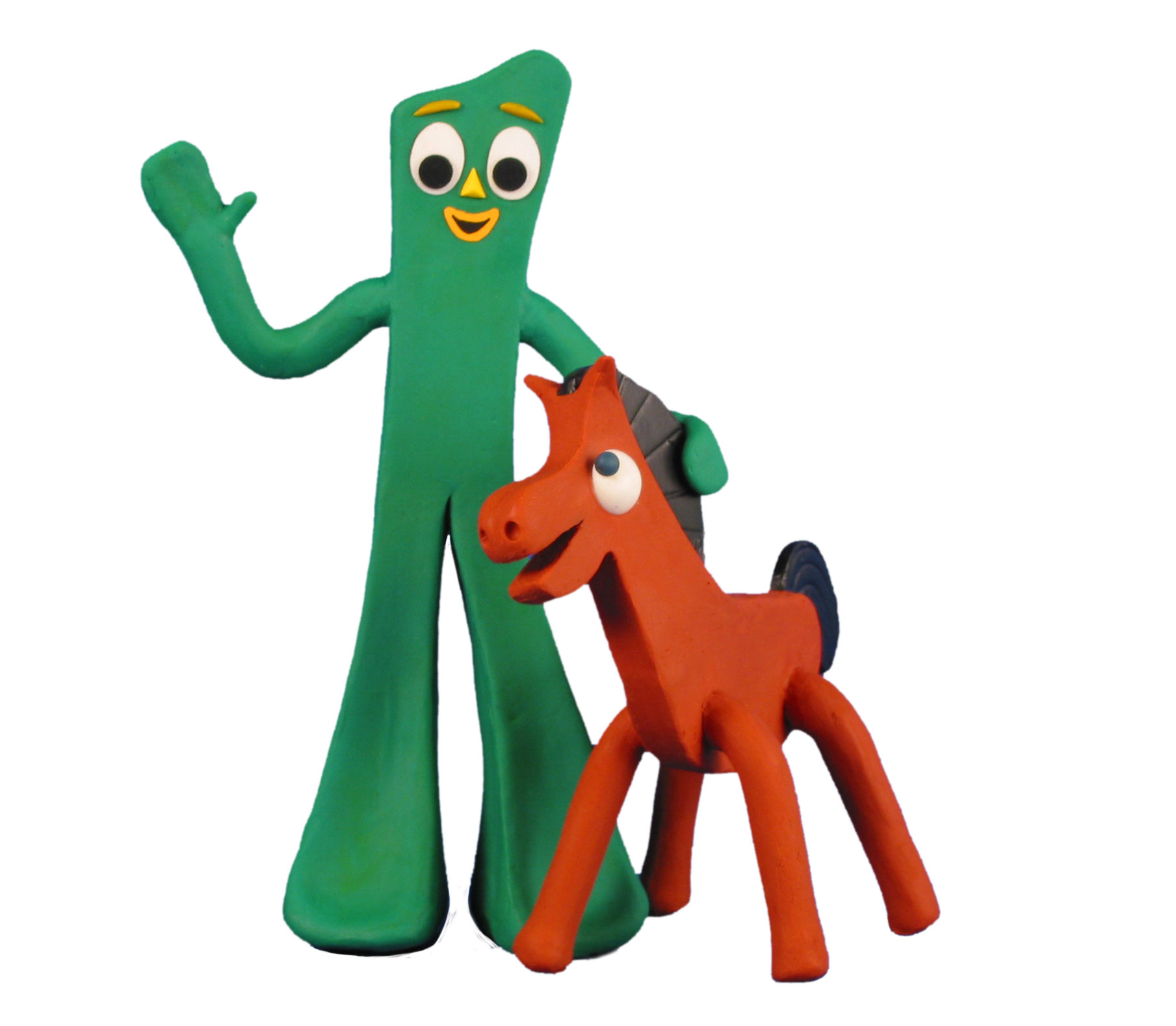
In the same vein, every year there are a load of rerun Christmas TV specials.  The networks call them classics and play them over and over.  Keep hitting the remote because the only ones worth watching are How the Grinch Stole Christmas (the original from 1966, not Jim Carrey’s fiasco) A Charlie Brown Christmas and the ones you watched as a kid.  The rest were made at the high water mark of Pokey and Gumby fame.   And although claymation may stir the hearts of artistic aficionados everywhere, to ordinary folks it’s like encountering a mime.  Yeah, yeah, yeah!  We all know it’s an art form, but I don’t want it anywhere near me.  So just download the ones you like and forget the rest.  There is, however, one notable exception which isn’t strictly network TV (PBS via BBC, actually) and it stands head and turkey above the rest.  It’s Merry Christmas Mr. Bean, and if you don’t understand the previous reference, you have got to watch this.  It is hilarious!

Which brings us to the Christmas Special, itself.  Over the years, the network TV Christmas Special has lost all its appeal.  Way back in the day, once a year, Andy Williams or Bing Crosby would haul out the winter wonderland backdrops and tuck into a few Christmas carols.  There were fake snow and lame jokes and either a puppet or a longhaired singer “for you young people.”  There was a guest star, possibly a comedy skit and one sombre “Silent Night” or “Little Town of Bethlehem.”  Then everybody joined in at the end to sing “We Wish You a Merry Christmas” and wave goodbye as if you were the one who was leaving.  The thing was (and this is what made them brilliant) it looked like Andy or Bing or whoever was actually having a good time.  Even though they probably taped the thing in August, it seemed, for all the world, that those people were enjoying themselves at Christmas.  They allowed us the willing suspension of disbelief.  It was sugar plum television.

These days, there’s a sharp edge to the Christmas Special.  The comedy is just slightly cruel, and it doesn’t look like anybody’s having any fun.  They go through all the motions and sing the right songs, but somehow they never step out of their celebrity personas.  You know it’s a Christmas Special.

I suspect there are still some good Christmas Specials out there, but I no longer have the patience to sit through the mountains of junk to find them.  And that’s the problem with network TV.  It’s loaded up with junk, and by the time you hear about the good stuff, you’ve missed it.  In the end, if I’m going to spend time with my TV at Christmas, aside from the few, tried and true, I’ll probably just watch a movie.

Friday: Christmas: A Guide to the Movies

Hawkeye Pierce and the Rise of the Smart Ass

I blame MASH; not the book or the movie: the television series.  If it hadn’t been for it overstaying its welcome, we wouldn’t be fighting for our lives against the pandemic of pompous asses that have plagued us ever since.

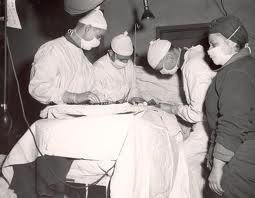
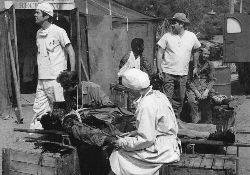
Most people don’t know that MASH the entertainment franchise is based on MASH: A Novel about Three Doctors written by Richard Hooker (H. Richard Hornberger.)  It was a cute little comic novel based on the real-life mayhem at a Mobile Army Surgical Hospital during the Korean War and originally published in 1968.  This was right around the time that Mobile Army Surgical Hospitals in the Vietnam War were up to their elbows in real casualties – almost literally.  Therefore, even though it wasn’t a New York Times bestseller (at the time) it enjoyed a certain success; enough to attract the attention of Hollywood.  Within a year, a mediocre industrial film director named Robert Altman got hold of a screenplay from the book and filmed M*A*S*H with Donald Sutherland and Elliott Gould.  It came out in 1970.  Altman absolutely lucked out with a combination of nouveau cinema camera techniques and worldwide anti-war enthusiasm.  It also didn’t hurt that the movie was black dog hilarious for the time.  It won the Palme d’Or at the Cannes Film Festival and a handful of Oscar nominations.  Interestingly, it’s only Oscar was for Best Screenplay, written by Ring Lardner Jr.  Television executives have never been accused of not cashing in on a good thing, so MASH, the television series, premiered on CBS two years later — on September 17th, 1972.  Nobody paid much attention to it at first, but then it was rescheduled behind Norman Lear’s All in the Family (the Amos and Andy of the 70s) and a star was born.  His name was Alan Alda.

Before 1972, Alan Alda was a permanent TV guest star and a recurring panellist on I’ve Got a Secret and What’s My Line? – two TV programs that are difficult to explain to a 21st century audience.  His only starring role was as George Plimpton in Paper Tiger (a movie I’m sure has only been seen by me and nobody else I know.)  However, Alda is a good actor and when he landed the role of Hawkeye Pierce (Donald Sutherland in the movie) he must have thought he’d died and gone to celebrity heaven.

He probably didn’t realize how long heaven was going to last.  MASH was on television for eleven years — nearly four times as long as the Korean War itself and about twice as long as it should have been.  I’m sure that more wounded soldiers came through the fictional 4077 MASH unit than actually fought the war – on both sides.  In the end, only Hawkeye and Hotlips (although nobody called her Hotlips anymore) remained out of the original cast, and they were treating industrial accidents from the local Hydunai factory.  Most importantly though, Alan Alda singlehandedly not only destroyed a perfectly good bit of television comic relief but made it socially acceptable to be an utter know-it-all jerk.

Here’s a bit of background.  The book and the movie make clear that Benjamin Franklin Pierce is a good doctor.  He finds himself trapped in a hell-hatched netherworld where doctoring is fast-tracked into something called “meatball surgery” — a lot of blood, stress you could hit with a hammer, and no end in sight.  Pierce and his buddies, however (like young people everywhere) think they can make the best of a bad situation by adding large quantities of alcohol and an active libido.  They believe this will somehow balance the absurdity of war.  The result is a bunch of antics about the Korean War that we’re never going to read in the history books but that probably happened, all the same.  (I’ve heard similar tales out of Vietnam.)  The important point is, never, at any time — in neither the book nor the movie — does Hawkeye Pierce start shooting his mouth off about macro-vision moral values.  He’s just trying to get himself out of the war in one piece, with his sanity still intact.

Back to 1972!  In the beginning, Alan Alda’s Hawkeye was recognizably the same guy from the movie, if not the book.  For example he never delivered Pierce’s signature “Finest kind” line with any believability.  But somewhere after the second season, it all went to his head and he started playing Pierce like a morally superior Groucho Marx with a knife in his hand.  He became a wiseass, and a mean one at that.  Not only that, but he was always right.  The guy ran around like he was the smartest person in the Korean theatre of war, and he was always willing to tell you about it.  There was no problem — medical or otherwise — that he didn’t have the inside scoop on, and it became increasingly apparent that he thought he was surrounded by idiots.  It got so bad that Trapper John got fed up and cleared off without even a “See ya later.”  (FYI Trapper was killed by Adam Cartwright’s grandson, who assumed his identity and took over his medical practice in San Francisco.)  He was replaced by B.J. Hunnicutt, a perfectly bland second banana, who oozed smarm so thick you could cut it with a scalpel.  Pierce may not have chased everybody off the show, but there were more casualties among the actors than there were in the operating room.  The only supporting cast left at the end were Klinger — a TV invention — and Father Mulcahy
— who had to forgive him.

That wasn’t the worse of it, though.  For at least the last six seasons and maybe more, Hawkeye Pierce acted as if his superior understanding trumped all other ideas and observations.  The show was written so that every week Pierce showed up the blaring inadequacies of everyone around him and made fun of them while he was doing it.  There was no moral question he didn’t have an answer for and no social injustice he couldn’t mend; meanwhile solving serious medical emergencies as an afterthought.  And all of this was delivered with a smart ass insult!  The guy didn’t just take the moral high ground: he landscaped it, built a house and settled in for the duration.

Before Alan Alda, Hawkeye Pierce was the type of guy you wanted to be around.  He was good at what he did and fun in the off hours.  After Alda, Pierce became the quintessential pompous ass, and since he was beamed into millions of living rooms every week (and still is) it’s now socially acceptable.  We’ve all met them.  He’s the guy (and they’re usually guys) who shows up with this whole “Bite me!  I’m smarter than you are.” attitude.  He always has all the answers even though you didn’t ask any of the questions.

Poor Benjamin Franklin Pierce became the prototype of our contemporary oh-so-superior man and unfortunately, since then, they’ve been mass produced.