
St. Patrick’s Day: A Brief History

patrick3It’s only two sleeps ‘til St. Patrick’s Day, the #1 High Holiday on the ethnic calendar.  It’s a testament to the Irish that they could turn a minor religious observance into a worldwide cultural event – the only one of its kind.  Yes, I know, more people celebrate Chinese New Year, and I’m well aware that nobody’s tipping a Guinness in Riyadh, Islamabad or Baghdad this March 17th, but generally St. Paddy’s is celebrated around the world.  Frankly, all you need to get at it is more than one Irishman (or woman, or one of each, or just a couple of guys with beer money.)  My point is St. Paddy’s is not hard to find on this planet — especially if you’re looking for it.

There are two reasons we go looking to celebrate St. Patrick’s Day.  One, the Irish are cool.  Unlike, their Celtic cousins the Scots, who are cranky and belligerent, the Irish like to have fun.  They dance and drink, bet on the ponies and generally carouse.  Hell, they practically wake up singing — and not those dreary dirges the Welsh trot out when they’re finished digging coal, but happy songs about drinking moonshine and shooting at Englishmen, two notable leisure activities on The Emerald Isle.

The other reason is, unlike all the other Celts, the Irish didn’t go quietly.  They’re kinda the ethnic “Little Engine that Could” – and everybody loves an underdog.  The thing is (despite glacial devolution in Scotland) the Irish are the only Celtic nation that has survived the last two millennia of wanton European imperialism.  And it took them 900 years of ferocious biting back to do that.

Here’s the “Peanut Gallery” history lesson.

Way back in the day, a couple or three centuries before Christ, the Celts were the dominant people in Europe.  They pretty much called the shots north of the Po.  Meanwhile, down south, after a major smackdown beating of Hannibal and his Carthaginian elephants, the Romans discovered that you could get a lot more respect with a kind word and a sharp sword that you could with a kind word alone.  With Italy secure and prosperous, they pointed their legions north and came marching over the Alps, swinging their swords at anything that didn’t speak Latin.  (The kind words have been lost to history.)  The Celts, who were more into poetry and playing the pipes, didn’t stand a chance, and by the time Tony Soprano’s ancestors were done, there wasn’t much left of Celtic culture.  A few brave souls retreated back into the stony outcroppings of Northern Spain, Brittany, Cornwall, and Wales.patrick7  The Scots were living on crap land that the Romans didn’t want anyway (they built a wall to keep honest Romans from even going there – just sayin’) so, it was only the Irish, isolated on their island, who survived intact.

After the fall of the Roman Empire, Europe was thrown into nearly a thousand years of survival of the fittest: life was basically dog eat dog and don’t piss off the Vikings.  Nations rose and fell, on the strength of their leader’s arm, but, still devastated by the depth of the Roman conquest, none of them was Celtic.  Things settled down eventually, around the time of the Renaissance, but the Celts remained a digested people, swallowed whole by the individual European nation states that evolved.  Except the Irish, who, as I’ve said, didn’t go quietly.

Ireland, once protected by its island isolation from Roman occupation, was in for a shock.  One sunny day in the 12th century, a bunch of Normans (William the Conqueror’s boys) tired of kicking Saxons across the Thames, showed up on the Irish horizon, ready to do battle.  For the next 900 years, it was on-again-off-again warfare as the English laid claim to what was never lawfully theirs, and the Irish told them — in no uncertain terms — to go home.  Add to the mix, frequent famine, chronic poverty and, after Henry VIII, a religious schism between English Protestants and Irish Catholic that you could sail a Coffin Ship through, and “the luck of the Irish” becomes a bit of an oxymoron.  Essentially, Irish history is a litany of armed brawls where everybody shot first and nobody bothered to ask questions afterwards.  These conflicts were interspersed with times of relative peace when the various combatants rested up and/or passed the hatchet on to their children.  As my great uncle used to say, “Never give an Irishman a reason to hate you.”

patrick8Finally, in the first part of the 20th century, the English took the hint and went home — well, kind of – Northern Ireland is still part of the United Kingdom – and the Gaelic Celts of Ireland became a nation once again.

That’s it in a nutshell.

So on Sunday, forget about your troubles, crack out the Bushmills and go find the music.  The Irish have been doing it for centuries.  And thank God for it, because without them, we’d all be singing, “When Norwegian Eyes are Smiling” for no apparent reason.  Happy St. Patrick’s Day!
Crazy for Coffee?

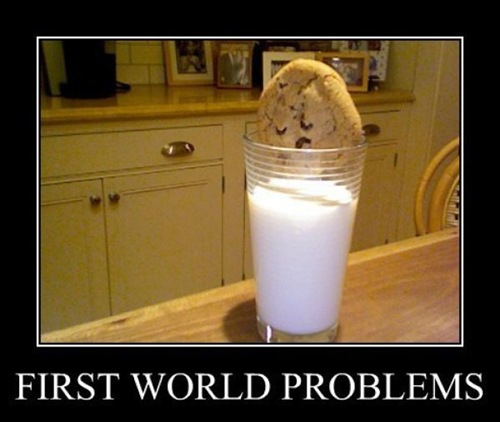
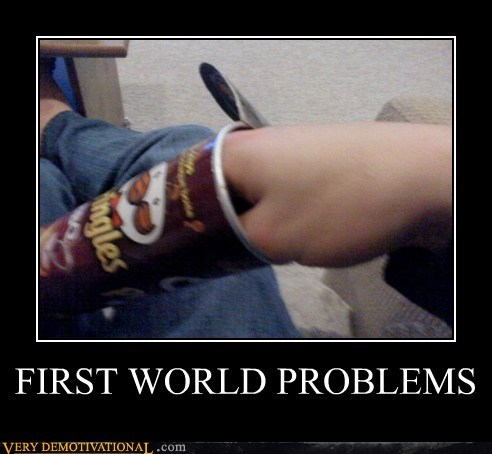
coffeeI’m not one to grouse about First World Problems.  Yeah, my hand doesn’t fit in the Pringles™ container, it’s hard to find Levis™ that fit and once, they were out of arugula at my Organic Fifty-Mile Food Emporium.  However, I seldom complain about such setbacks.  It’s all part of the game, as far as I concerned.  Actually, I’m usually on the other side of the fence.  For my money, our society is full of overfed, over-medicated, bone-lazy malcontents, constantly whining about stuff that doesn’t matter.  In a more civilized time, they’d have gone under in the first pillage, and stray dogs would be licking their bones.  However, there are a few things in our world that do burn my bacon, and one of them is coffee.

Strictly speaking, coffee is not essential to our well-being.  I know several people who never touch the stuff.  Nor is it scarce.  It grows abundantly all over the world, and you can find it in just about every grocery store.  In fact, like oil and cocaine, coffee is one of the most widely traded commodities on the planet.  However (and this is what burns me) unlike every other product humans use, abuse or devour, coffee simply refuses to obey the basic rules of economic supply and demand.  Let me explain.

Day-to-day, coffee is so cheap that I have no idea what it costs.  I don’t keep track.  I know that, in any grocery store in all directions, I can haul out five bucks and buy enough regular grind to keep me awake for at least a week — so I don’t worry about it.  Sometimes, it’s on sale; sometimes it isn’t, but, like bad Spielberg movies, it’s always going to be there.  That’s one side of the coin.

On the other side, if I walk less than 500 metres from the coffee aisle of my favourite food store into the mall, I run into what can only be described as Coffee Bean Buccaneers.  These 21st century pirates are selling coffee by the cup as if it were the Treasure of the Sierra Madres.  Kiss your five bucks goodbye because that doesn’t even get you a place in line and, oh yeah, you’re going to stand in line.  I have yet to go to a Starbucks, Hortons, Blenz, et al and escape in less than twenty minutes.  Why? Because, these days, everybody from Maine to Malibu is on a 24/7 caffeine bender.

People are lining up, three deep, to get their mitts on a couple of hundred mls. of Kona Soft Blonde or Kenyatta Cool Corona or some other such exotic nonsense.  But it`s not like coffee`s cheap or even on sale.  In the same time period it took cell phones to go from over $800.00 to Here-Take-One-They’re-Free, coffee has gagoopulied in price.  What was once a fifty cent all-you-can-drink morning beverage has become a $9.95 that’s-all-you-get experience.  And the weird thing is, people are getting it poured into a paper cup and they`re walking away with it – happy as a penguin with a fresh fish.  You would think that if you’d just paid a Lindbergh ransom for a beverage that was brewed from handpicked beans, slow roasted over a sustainable rosewood fire and pulverized by union-scale Gregorian monks, you`d want to sit and savour it.  Apparently not, because tcoffee1he world is full of people charging around, clinging to their paper cups as if they were carrying the relics of the saints — with two sugars and one cream.  They`re everywhere!  You can`t turn around without seeing somebody with a cup in their hand.  A person might need a coffee on the bus if they got up late that particular morning, but who needs a coffee at the podiatrist – at 2 in the afternoon, for god`s sake?

I don`t mind ponying up the bucks for a specialty item.  However, I can assure you that the difference between what some people are calling Medium Roast Jamaican El Negra Java, for example, and Good-To-The-Last-Drop Maxwell House is minimal– especially after the selected serving has been drowned in steamed milk, sprayed with born-in-the-bottle whipped cream and covered in cinnamon-flavoured sprinkles.  It’s coffee, folks!  There`re only so many things you can do to it.

Our current coffee cult might be just another First World Problem, but I’m telling you the entire industry is living proof that P.T. Barnum was right.

Solid Walls of JFK

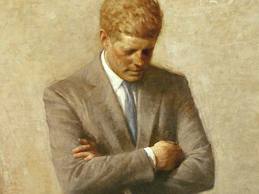
jfkMy generation has survived earthquakes, famine, Disco, AIDS, the End of the World (several times) and Richard Nixon.  For all our relentless whining, we’re actually a tough bunch of folks.  However, we are about to be tested as no generation before us has ever been.  Let me be the canary in the mineshaft and warn all humanity that, for the next nine months (about the same amount of time it took Rosemary to have that baby) we’re going to be up to our elbows in John Fitzgerald Kennedy – and it’s not going be pretty.  You might not have heard – but you will – that this is the 50th anniversary of his assassination.  From now until November 22nd, we’re going to be subjected to solid walls of JFK.

Before I get too deep into full-throated rhetoric, I want you to know that I believe John Kennedy was a good president.  He wasn’t necessarily Mount Rushmore great, but, as CEOs of the American Empire go, he’s definitely somewhere on the top end of the middle group.  The problem is it’s hard to judge.  We tend to credit him with initiating the good stuff (like civil rights) and to hand Lyndon Johnson the blame for mistakes (like Vietnam.)  What we forget is that Kennedy merely set the tone for both.  He didn’t have enough time to formulate policy.  It was Johnson who had to handle the follow-through and, alternatively, clean up the mess.  It’s this fundamental oversight that makes me wary of the approaching media tsunami.

We love JFK more for the idea of him than the man himself.  We want to believe that once there was a Camelot: a place where a bold young king gathered “the best and the brightest” around him, to spread peace and prosperity throughout the land.  An All-American America where daring New Frontier knights joined battle equally with the suits of things like corporate steel as well as the hard men of organized crime.  A place where lawyers used the honest tools of the law, not the loopholes; a place where journalists were honourable and money lenders trustworthy.  A place where smarts and the arts weren’t sins; where painters and poets rubbed shoulders with scientists and engineers; where university dons played metaphorical (and sometimes real) touch football with their political masters, each learning from each.  A place where race didn’t matter and our only adversaries were poverty and ignorance.  We want to believe that — for one brief, shining moment — the great tribes of America spoke with one voice; a voice that said we can do anything if we try.  We want to believe this because those of us who were there think we saw it happen.

Unfortunately, fifty-year-old memories have a way of clouding and fading and distorting the truth.

Fifty years ago, my generation was in the first bloom of immortal youth.  We see those years as a time of “sunshine, lollipops andjfk1 rainbows … brighter than a lucky penny.”  The Kennedy presidency is that tangible talisman that still tells us how young and unafraid we were.  We hold it dear to our hearts.  Yet it also holds the sum of all our regrets — all the shoulda, coulda things we woulda done if Lee Harvey Oswald had just called in sick that day.

For the last half century, day-late/dollar-short Cassandras have been turning history into legend, reworking JFK into the once and future king, soothsaying all the wonderful things he might have been.  Now, the Kennedy Camelot is about to get a modern-day makeover, courtesy of our ubiquitous media who can’t wait to cash in on an aging population, eager to squeeze in one last Look-At-Me.  They’re going to do it, too — and with all the spin that money can buy.  And Kennedy’s Camelot will take its place alongside Avalon, Shangri-La and Xanadu — unrecognizable to anybody but the myth makers.