History: Don’t be Afraid!

More than a few years ago, my niece asked me why we study history.  Actually, what she did was look up, in frustration, from a thick textbook that was mostly pictures and said, “Why do we have to learn about all these old _______s?  She used an expletive, inappropriate for a 15-year-old — even now.  I almost had a heart attack.  Not because of the expletive — I’d heard the word before – and used it a time or two.  No, I was astounded that there was someone on earth who wasn’t fascinated by old stories; especially when that somebody shared huge chunks of my DNA.  Up until that moment, I had thought everybody loved history.  I’ve since learned that large segments of our society are afraid of it.  My niece, by the way, has long since seen the error of her ways — or so she told me after several harangues on the subject.

These days, history is subject non grata in the halls of learning.  It’s kinda like farting.  Everybody is aware it exists, but it’s not acceptable in polite conversation.  People, in general, don’t talk about it and the ones who do aren’t really worth talking to.  It … makes people uncomfortable.  When the subject does come up, they tend to laugh nervously or give it the indignant scowl.  This is entirely understandable, by the way; most contemporaries don’t know enough about history to fill a mouse’s ear.  It hasn’t been taken seriously in Canadian schools for over a generation.  You see history is dangerous.  Not all those stupid dates and battles and crap – that’s just memory.  It’s the actual history itself – the wherefores and the whys – that’s what scares some people.  They’re frightened by the stuff that’s etched in stone – sometimes literally.

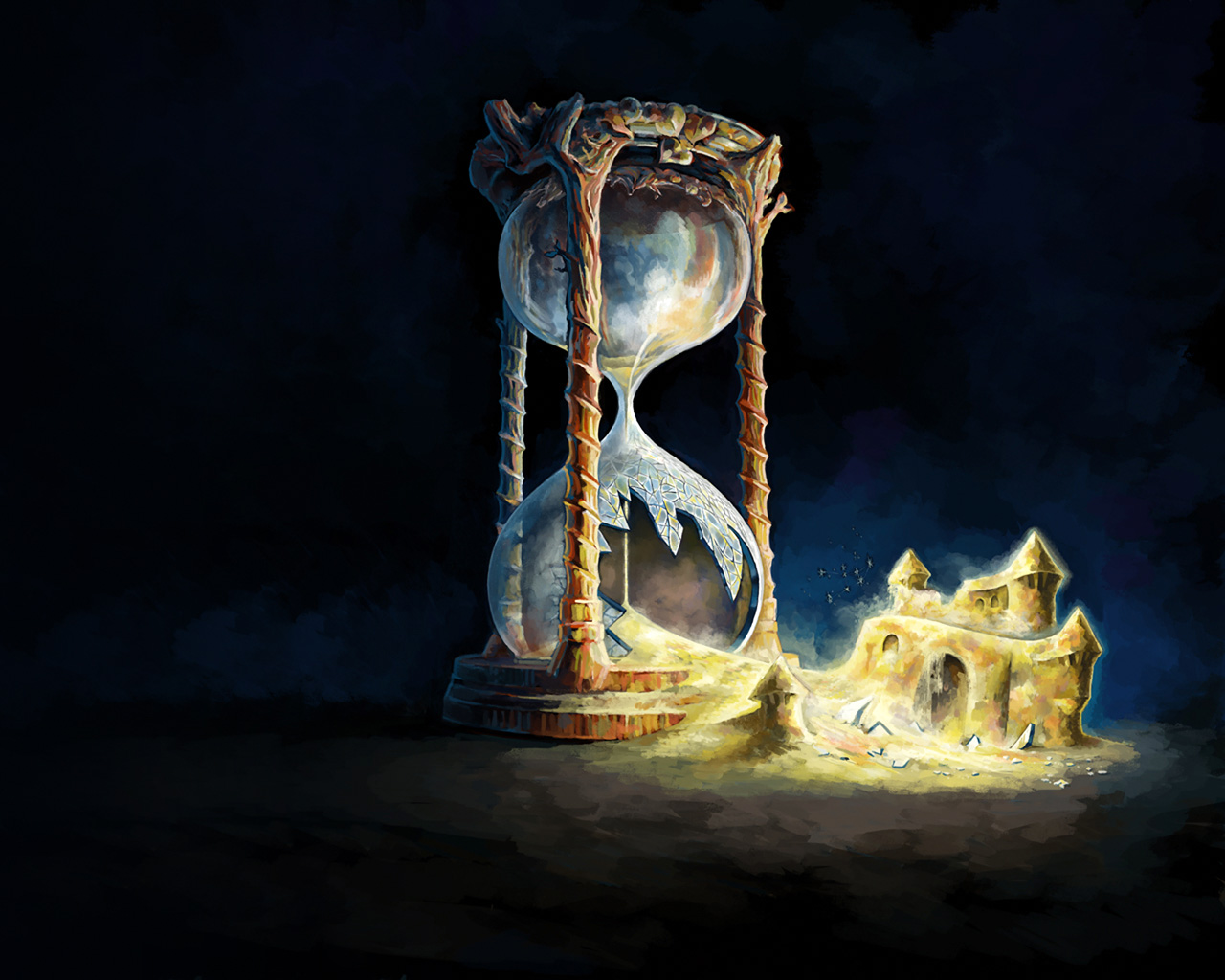
People who hate history do so for no other reason than that it exists.  It is the accumulation of our shared human experience.  It is a permanent collection of our ideas and ideals.  It not only tells us where we came from; it tells us how we got here.  It’s like having a bunch of really, really smart grandmas who know how to make cookies.  We don’t have to reinvent the chocolate chip wheel every time we want a snack ‘cause Grandma left us the recipe.  Pretty simple, actually, but it’s the way the entire world works.  For example, you might be reading this on your Smartphone because Grandpa Graham Bell wanted to talk to deaf people.  Or you’re commuting to work because great-grandpa Watt was fascinated by his mother’s tea kettle.  Or you see an emergency and call 911 because great-great grandpa Hammurabi figured out that the rule of law is better than every man for himself.  It’s all the same, and it goes on and on.  Every single one of our innovations and institutions is built on these little itty-bitty layers of knowledge, put together by our ancestors.  It’s a permanent record of what we are and we can’t change it.  That’s why a lot of people fear history so much.  It knows where the bodies are buried and it has all the evidence.

It’s very difficult to lie to people when they have all the evidence.  That’s why dictators take after history with such a vengeance.  They really don’t want people looking too closely at ideas that disagree with them.  Just look at Grandfather Hitler: he wanted to remake society into his vision of a fascist paradise.  So, one of the first things he did was gather up all the books that said anything different and burn them, in places like Heidelberg University.  He thought that if he destroyed the inconvenient parts of history (the ones that showed he was clearly a madman) he could rewrite the rest to justify his insanity.  He almost made it, too, but he was denied his demented social order because ordinary people all over the world knew better.

My point, of course, is if you want your vision of society to be the model for the future, it’s best to get rid of the past.  After all, the historical record of Hitler we’ve just seen shows us it’s impossible to convince people you hold the exclusive rights to utopian ideology when history says you’re a fraud.

These days, however, when you want to destroy the past, you don’t have to go all Fahrenheit 451 on it.  All you have to do is discredit it.  In my country, for the last couple of generations, history has gone from a serious study of events and ideas to a series of J’Accuse kangaroo court cases.  Historical people and events have been tried in absentia by a judge and jury of our temporary contemporary values and found guilty.  History is now considered to be nothing more than a set of misguided nefarious plots, perpetrated on the world by dead European men.  The quaint idea that our 2011 values are the be-all/end-all has closed the door on any serious discussion of history.  The irony is that every generation thinks history ends with them.
Obviously, history will continue, but with an entire generation historically illiterate, it’s difficult to realistically discuss either the present or the future.  We cannot talk about social, political or economic change when the only knowledge most people have is anecdotal living memory.  More importantly, without any background, many people cannot hope to understand our society’s serious problems.  It’s no wonder they seek wisp in the willows solutions or follow the simple demagoguery of sound bytes: their only point of reference is the here and now.

I’m certain that eventually, the pendulum of history will swing, but as our problems multiply exponentially by dint of overwhelming ignorance, it can’t come fast enough for me.  Fidel Castro once said, “History will absolve me.”  I’m not sure that’s going to work for us.

Pork and Beans and Honour Killing

When I was a kid, people ate something called Pork and Beans.  It came in a can and was basically baked beans with a couple of teeny tiny pieces of…meat?… which may have originally come from a pig.  In a time before Fast Food, it was a quick and easy meal – right up there with Kraft Dinner™.  As far as I know, people had been eating Pork and Beans ever since Napoleon figured out his army marched on its stomach and served up the first MREs, sealed in champagne bottles.  Regardless, a lot of people ate Pork and Beans back in the day.

Then a curious thing happened.  A nameless Canadian bureaucrat was sitting around, picking his orifice one day, when, for some unknown reason, he took a look at the contents of the Pork and Beans can.  He discovered what everybody else on the planet had known for a hundred years: Pork and Beans was actually a whole lot of beans and not very much pork.  According to our boy, though, this was clearly a case of consumer fraud.  Canadians (at least those with the IQ of a blueberry) needed to be protected from corporate treachery and lies; otherwise, they might think they were buying a can of pork with some beans in it.  I’m not making this up, by the way: it’s a fictional depiction of a series of real events.  Anyway, the name was changed from Pork and Beans to “Beans with Pork” — to reflect the actual contents of the can.  It was our government hard at work and a presumed victory for consumer rights.  That was sometime back in the 60s, and I’m sure the nameless bureaucrat has long since received his heavenly reward.  He’s probably lounging through eternity right now, counting harp strings or divvying up the haloes.  However, I think we need to resurrect his kinda diligence these days and get a couple of things straight.

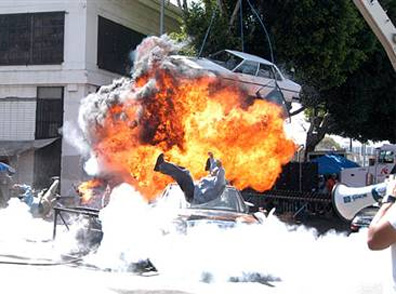
First of all, for the last two or three decades, some people have been wrapping themselves in explosives sprinkled with metal shards, ball bearings, marbles or what-have-you.  They wander into crowded public places, push the detonator, and ka-boom.  Everything (and everybody) within shouting distance is torn to ribbons.  It’s a disturbing trend.  We call such people “suicide bombers.”  What a deceit!  Nothing could be further from the truth.  Those people who just got killed in the shock and awe of intimate acquaintance with plastic explosives did not, I repeat NOT, commit suicide.  They were murdered!  And the person who pushed the button is the murderer!  There’s no other name for it.  The only way the button pusher can be called a suicide bomber is if he blew himself to smithereens in the privacy of his own home: then, he might have an argument.  However, the minute he involves other people, he (or she) becomes a murderer – full stop – and a premeditated murderer, at that!  After all, it takes a bit of doing, even in a war zone, to get your mitts on explosives, learn how to use them properly and scope out a location for maximum damage.  These might be crimes of passion, but they certainly don’t happen on the spur of the moment.  And speaking of passion, I have the feeling homicide bombers (note the more inclusive name) may be committing a hate crime as defined by Canadian law.  You really have to hate somebody a lot to blow your own guts out just to get at them.  I don’t hate anybody that much.  In fact, I don’t even know anybody who hates anybody that much.

For my money, the PR Company who thought up “suicide bomber” as the accepted term for a person who deliberately goes out and murders complete strangers should get a Clio Lifetime Achievement Award.  This is one primo euphemism that puts anything the US government ever thought of to shame.  Adbusters, where are you now?

However, if you want to talk about euphemisms, the granddaddy of them all is “honour killing.”  If you’ve been in a monastery for the last ten years, understand that honour killing is the growing tendency whereby male members of a family get pissed off with one or more female members of the family and, instead of arguing about it, they simply kill them.  Honour killing?  What an oxymoron!

I’m going to go out on a limb here and say there is no honour in killing people.  It’s not an honourable practice.  The only time it’s ever even condoned — and then with mucho caveats — is during times of war or in situations of extreme self defence.  That’s it!  It’s the big crime!  There’s nothing worse!  So why have journalists, social commentators and the judicial system decided that when it comes to slaughtering members of your own family, that’s somehow tangled up with familial honour?  What social faux pas could be so heinous that it deserves the death penalty?  They didn’t execute Jeffrey Dahmer for God’s sake — and he ate people!  If your wife or daughter is eating people, you might have a case, but otherwise….   Actually it should be called “really, really bad killing” for the simple reason that (at the risk of sounding a little too insensitive for the 21st century) it’s actually a worse crime than killing a stranger.  I’m not downgrading the importance of strangers, but objectively you have no serious emotional attachment to people you’ve never met.  Whereas, if you’ve held some baby in your arms, helped her take her first step, taught her to read and watched her grow, you’ve got to be one cold cowboy to murder her.  And, at the end of the day, that’s what it is – murder.

However, here’s the one that gets me, and I do not understand why every advocacy group in this country from The National Action Committee on the Status of Women all the way down to the Girl Guides isn’t boiling over with rage about this.  I find it terribly disturbing that this happens so frequently that we have a name for it.

When I make out a grocery list, I still write Pork and Beans.  I buy them and eat them even though there’s enough sodium in there to kill me.  I know what they are, regardless of what we call them.  The problem with linguistic gymnastics, though, is it tends to soften the blow.  It dilutes the language so offensive things are more palatable.  However, sometimes we need to be offended; we need to be shocked.  We need to call things what they are in order to recognize them and put a stop to them.  Sometimes, the sound byte should say, “Wife and three daughters killed in an alleged Cold Bloody Murder.”

Jack the Ripper: The Last of His Kind

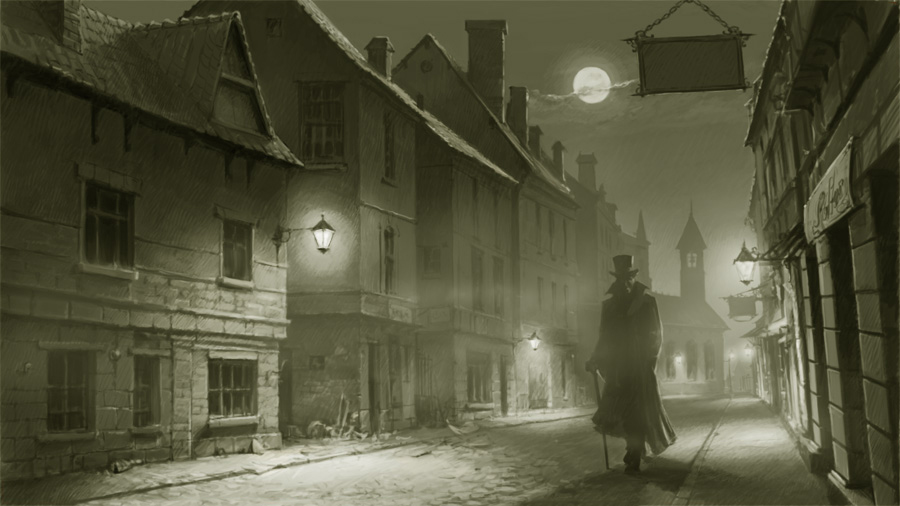
The streets are cold in London in October, 1888 and the nights are long and empty. In November the rains come, with a chilly wind off the Thames River. Only the poor are out and about, searching for the few pennies they need to buy shelter and food. The people of Whitechapel held their breath and waited for the terror that walked among them. They didn’t wait long.

On November 9th, at about 11:45 pm, Mary Jane Kelly was very drunk and singing “Only a Violet I Plucked from my Mother’s Grave.” She was with a man, walking back to her room at #13 Miller’s Court. A witness described him as stout and shabbily dressed. At 1:00 am, Mary Jane was still singing but soon stopped. At approximately 2:30 am Kelly was seen on the street with another man (or the same one) going back to her room at #13. The witness, George Hutchison, claimed he had briefly talked to Kelly a couple of minutes earlier. At 3:00 am, Mary Ann Cox, a neighbour at #5, returned home and later testified there was no sound or light coming from Mary Kelly’s room. At approximately 10:45 the next morning, John McCarthy, the lodging-house keeper, sent his assistant Thomas Bowyer, to “Go to #13 and try and get some rent.” Bowyer knocked at the door, and when he didn’t get an answer, went round to the window and put his hand through the broken pane and pushed back the old coat that served as a curtain. Mary Jane Kelly was dead. She had literally been chopped to pieces, and according to the autopsy, “the heart was absent.”

In their briefest form, these are the tales of the five Jack the Ripper murders. There are hundreds more stories, facts and clues. There are eyewitness accounts, police records and detailed autopsy reports. There has been enough information collected over the last century to fuel a whole industry – Ripperology. There are literally hundreds of theories. There’s the Masonic Theory – some sort of cover-up by the police members of the Masonic order. There’s the Jewish Theory – a blood sacrifice from some demented sect. There’s Leather Apron, a butcher gone mad, and Doctor Ripper, an insane surgeon. There’s even a theory that there was no Jack the Ripper at all: her name was Jill, and she was a deranged midwife. Over the years, many prominent Victorians have been accused of being Jack the Ripper. Those theories have reached even into the royal family and convicted the Duke of Clarence, Queen Victoria’s grandson, second in line to the British throne. Each of these theories comes complete with a written article or book, claiming to solve the mystery. Each one carefully documents the evidence; each one builds its case, and each one comes to its own conclusion. But each one unravels far faster than it was ever put together. Why? Too many things don’t fit; too many things are odd. There are too many coincidences, and too many “facts” are in conflict with what we know to be true. There are just too many impossibilities.

Mary Ann Nichols and Annie Chapman were both killed and mutilated in less than 30 minutes — in the dark – and Chapman was killed on a busy thoroughfare on a Market Day morning. Catherine Eddowes was killed and her kidney surgically removed in less than 15 minutes! – once again, in the dark. One murder under these circumstances is possible; two, maybe. But three go beyond the realm of belief. On September 30th, 1888, how did Jack the Ripper commit murder, travel some distance through tangled streets and alleys, commit murder again and escape both times – unseen? It’s possible, but highly unlikely. Each killing is possible individually, but taken together – five? In the open streets of Whitechapel? That’s pretty far-fetched — especially since, after the first murder of Mary Ann Nichols, the entire community was on alert, watching, including several vigilante groups.

The only murder that has any logical explanation is that of Mary Jane Kelly, who was killed in her room. But there is evidence that Mary Jane Kelly wasn’t even killed. Caroline Maxwell, of #14 Dorset, testified that she saw Mary Jane Kelly in front of Miller’s Court at 8:30 that morning and stopped and talked with her. Maxwell also testified that she saw Kelly again at 9:00 am, outside the Britannia Pub. Maurice Lewis testified that, at 10:00 am, he went into the Britannia Pub and saw Kelly inside, talking and drinking with some other people. These two independent testimonies cite the same pub; could two different people be so specific and so wrong? In another weird twist, Catherine Eddowes identified herself as Mary Jane Kelly when she left Bishopsgate police station. Why? Another coincidence? Perhaps, but how can there be so many? For example, all of the victims had sort of drifted into Whitechapel at around the same time. Nichols, Eddoes and Stride had all lived on Flower and Dean Street, within a few doors of each other. Their lives and habits were centered around Dorset, a short street off Commercial. They all frequented the Horn of Plenty and the Britannia Pubs and they all worked the streets of the area as prostitutes when they had to. Yet, there is no evidence that they even knew each other – although that doesn’t seem possible in a crowded, poor community. And there’s more, much more – including the Goulston Street graffiti and of course the letters. Each coincidence is possible, but, like the murders themselves, not all of them. The laws of anti-chance alone forbid it.

So, even with only our cursory examination we can come to the same conclusion that every Ripper investigator has come to since the murders themselves. Some hideous evil stalked the streets of Whitechapel, London in the autumn of 1888. It killed women and then it stopped killing them. That’s it. There is nothing else. The mountain of evidence is so strange and contradictory that we cannot glean anything further from it – except, perhaps, that the murders could not possibly have happened the way they did. The amount of coincidence, happenstance and odd occurrence strains even the willing suspension of disbelief. No fiction could have been written so wildly. And the monster that called himself Jack the Ripper will remain anonymous, forever lurking in the shadows of time and the cold dark soul of our 4 o’clock in the morning.

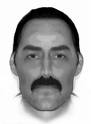
This is why we remember Jack the Ripper. He is the last resident of Evil. In our calm, clean, well-lighted world, we rehabilitate our criminals and sanitize our villains. We give them names and parents. We seek their motivation and try to understand their desperate minds. We hold them to be one of us, tricked, by the very society that condemns them, into performing hideous acts. Our world has no room for monsters, or fiends or the tortures of Hell. But Jack the Ripper defies us all by his very existence. In 2006, the BBC produced a documentary about Jack the Ripper. They used modern techniques of forensics, like geo-profiling and computer enhanced facial construction to reassess the 120-year-old crimes. They found that Jack the Ripper was an ordinary fellow who probably lived on Flower and Dean Street. He probably worked at a menial job and drank his gin at one of the pubs. They even produced a face. But Jack the Ripper will have none of this. He has no name, no family, no childhood, no face. No amount of empathy or good intentions can ever wash the blood from his hands. He alone still lives with the demons – and laughs — the last of his kind.