The Art of Travel

Unlike fine wine, my father travelled well.  He loved to go places; the man had road trip imprinted in his DNA.  To him, vacations were expeditions and despite carrying a bunch of kids with him, dad always managed to have a good time.  My father didn’t make the mistake that most people do when they go on vacation; he never stepped out of character.  Dad understood that the one inescapable fact about being a tourist is you are one.

There’s a common misconception that, in order to have a kick-ass vacation, tourists must somehow seamlessly disappear into the local culture – anything less is not worth the brag.  First of all, this is false; secondly, it’s impossible.  No matter what you do, when you finally hit the sightseeing streets of wherever you’re going — whether London, England or Rubberboot, Romania — everybody but you knows you’re a tourist.  You don’t even have to open your mouth.  Standing on the corner or sipping in a cafe, your clothes are different, your body language is odd, you smell funny and you’re carrying way too much stuff.  Actually, that’s the biggest giveaway.  People on vacation always haul all their goodies around with them.  You might not be wearing a Hawaiian shirt or have a cliché camera hanging around your neck, but if you’re dragging a bag the size of Wisconsin, everybody knows you’re not from around there.  (Ask any local thief.)

However, just because you’re a tourist doesn’t mean you can’t get past the typical tourist experience.  It’s a lot easier than spending your time trying to blend in.

First, lose the bag!  Unless you’re backpacking in Patagonia, you really don’t need all that stuff.  Most people who lug their crap from the Louvre to the Loire Valley never use half of it.  If you simply can’t live without two litres of bug spray, so be it, but expect to be a target for gypsies, tramps and thieves and to pay premium prices for anything that isn’t clearly marked.

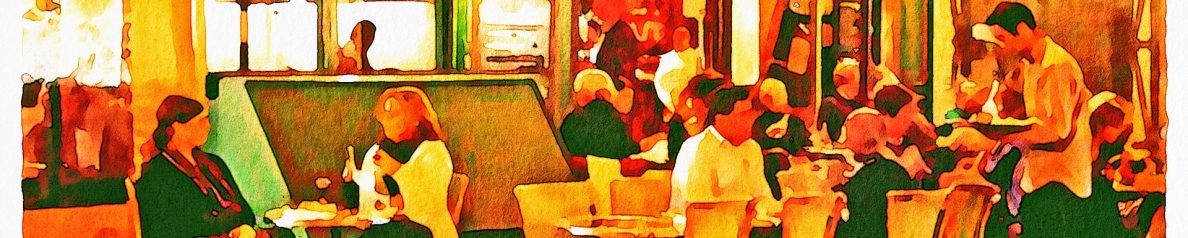
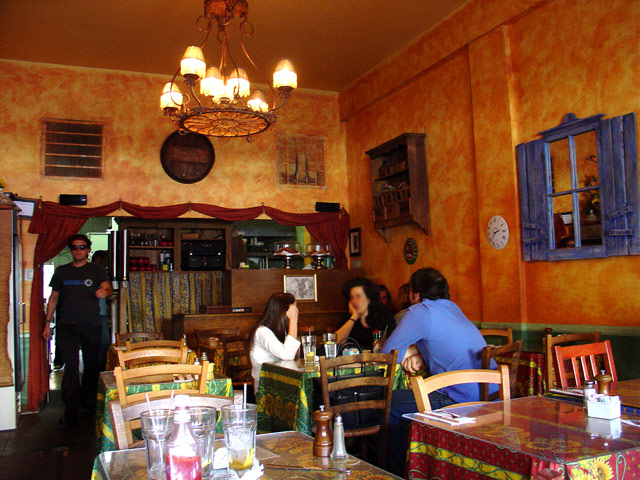
Second, find a bar or cafe and go there at about the same time every day for a beverage (adult or otherwise.)  They’re great for planning your day in the morning or doing a post-mortem at night.   More importantly, since most tourists don’t do this, after about the third day, the owner or staff will take custody of you.  You will become their tourist.  They’ll take a personal interest in the good time you’re having in their town.  This works best in smaller places, but it happens everywhere.  Remember, the local folks can tell you more about where they live than twelve travel agents combined.  These are the people who know where the puppet shows are and who has the best fish.  They also have friends, aunts and cousins who sing in the local band or make jewelry or might be convinced to take you up-river.  Not to brag, but I’ve been invited to a French birthday party, got a personalized tour of the cliffs of Cornwall, sung “Hasta Siempre” on stage in Havana and danced with a for real Polynesian princess in a South Seas thunderstorm — all because I like a second cup of coffee in the morning.
Third, never comparison shop between home and away.  That’s what gives tourists a bad name.  Always remember you are just as exotic to the people you meet on vacation as they are to you.  I once got into a Franglais conversation with a guy in Paris about the amount of doggie do-do there was in the streets (at that time, there was plenty.)  He was absolutely fascinated that North Americans clean up after their dogs.  To him, it was the oddest thing for people to willingly pick up dog poop and take it home with them, and he asked me quite seriously if we did the same thing with cats.  I don’t think I had an answer for him.  My point is, when in Rome don’t start telling the Romans how they do business in Nebraska; it just sounds funny.

Finally, but most importantly, if you’re not a jerk in your home town don’t become one on vacation.  Remember the average shopkeeper in Dakar is no different from the one in Detroit.  They both have their own set of problems.  Yes, definitely complain if you’re getting scammed, but otherwise go with what you got.  Keep in mind that you were the one who chose to travel in the broil of August.  You were the one who overloaded the luggage, flew economy to save money and picked the bed and breakfast with the bathroom down the hall.  If your feet are sore, get off them.  If the pastry tastes like glue, it probably is.  And try as they might, the tour guide can’t make the whales jump, no matter what the brochure says.  Believe me — and I have it on good authority from my dad — if you don’t act like an obnoxious tourist, you won’t be treated like one, and you’ll have way better stories to brag about when you get home.
Shakespeare Without Tears

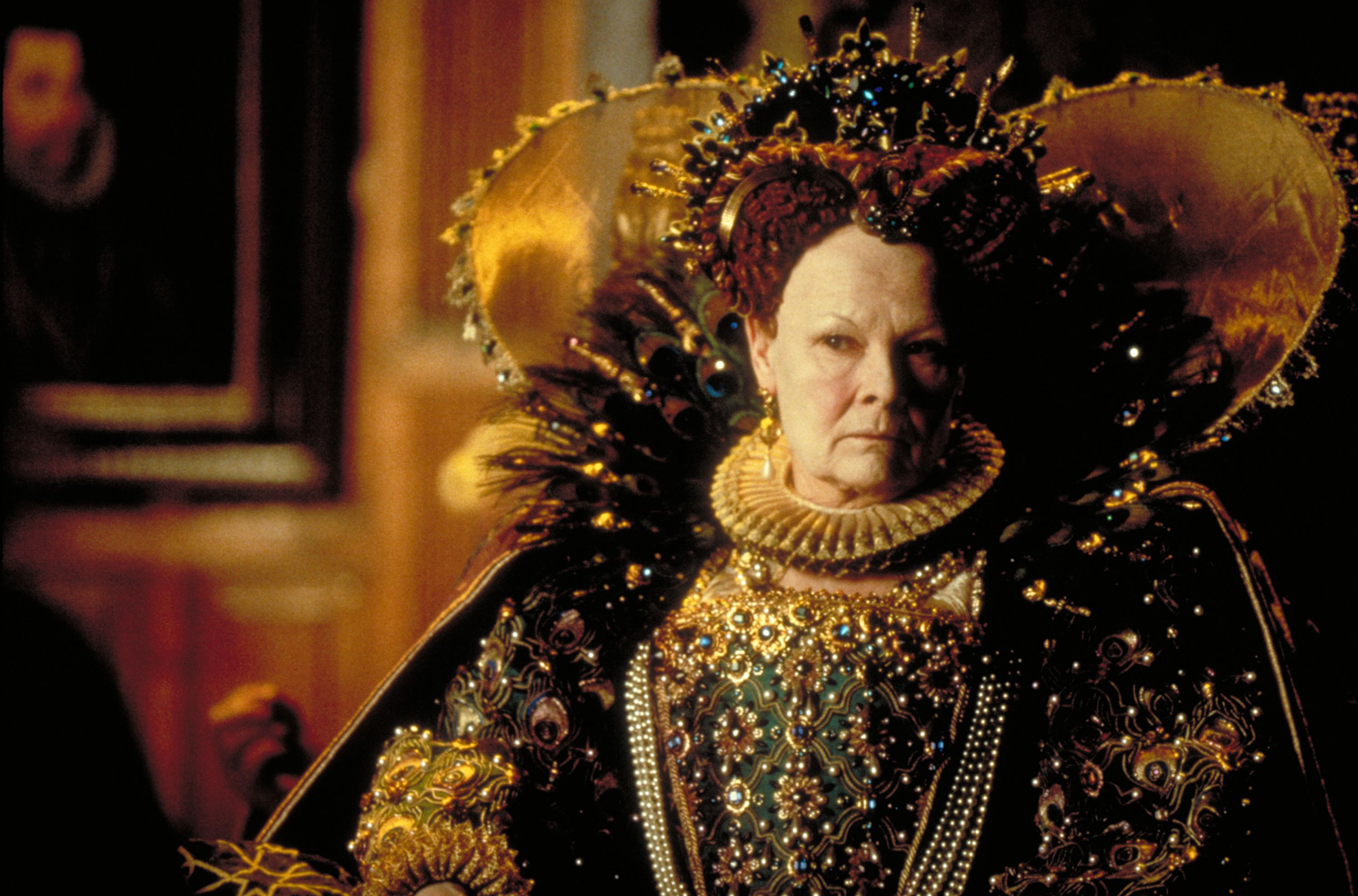
Apparently, Shakespeare’s birthday was a couple of days ago (nobody really knows for sure when it is) and I missed it.  That’s okay really; I don’t care when Shakespeare was born.  Nor for that matter do I care to wander into the great discussion about whether he wrote his own plays or not.  As far as I’m concerned, they could have been written by Fetchin’ Gretchen, the German barmaid at the Golden Hind Hotel.  Shakespeare’s plays exist: if a local boy from Stratford didn’t write them, so what?  Somebody did.

Actually, the only reason there’s any debate at all about who quill penned what for whom is scholars can’t figure out what else to do with Old Bill, now can they?  It’s not like there’s a nerdy little war going on in the Ivory Towers about whether Shakespeare is crap or not.  Rhetorically speaking what do Shakespearean scholars do all day — sit around telling each other how great he was?  That’s the point: Shakespeare is the greatest writer in the English language and nobody disagrees except sophomores trying to be difficult and people who’ve never seen the plays.  Everybody knows Shakespeare is the best, but I would venture to guess that 8 people out of 10 haven’t got a clue what he’s talking about.

Shakespeare appreciation runs into a bunch of trouble in the 21st century.  First of all, unless your education was terminally New Age, you got stuck with the guy sometime in your high school career.  Since modern education means kicking the delight out of everybody but the janitor, chances are good Macbeth was ruined long before Macduff got hold of him in Act V.  Besides, I’d bet even money that the person running the show in Lit. 12 probably didn’t know much more about the Bard than you did.  Cliff Notes work both ways.

The other problem is Shakespeare wrote his plays in Shakespearean English, and we don’t speak that language anymore.  A lot of the clever stuff and the beauty of it is simply lost in translation.  For example, “But, soft! what light through yonder window breaks?/ It is the east, and Juliet is the sun.” doesn’t mean much if you don’t know anything about courtly love.  And that’s the major problem: Shakespeare is talking about things people in the 21st century know nothing about – love and power.

These days, we have reduced love to its lowest common denominator: the relationship.  This is a cerebral little device that cuts our emotional well-being off at the knees.  Having a relationship is akin to owning a small kitchen appliance like a juicer.  You buy the thing, make juice at every opportunity for six weeks or so, but slowly by slowly, it ends up largely unused, sitting in the kitchen, getting in the way.  Occasionally, if guests come over, you might crank it up again, but eventually it gets stored somewhere out of mind until it’s time for the yard sale.  Shakespeare didn’t think that way about love, neither did his audience.  They knew love for what it is and wanted to hear the words that spoke its name.  They didn’t talk about “having feelings” for someone or “taking the relationship to another level.”  (What is this crap?  Angry Birds™ with benefits?)  No!  The Elizabethans were engulfed by love; that’s where “swept off your feet” comes from.  They felt it: they didn’t think it.  They looked forward to it and mourned its passing.  To them, it was what life was made of.  Even though we proclaim our sensitivity at the drop of a puppy, we just can’t get there from here; we don’t know anything about it.

Nor, for that matter, do we know anything about power.  In a world that no longer recognizes obscenities, the mere mention of power can still cause an embarrassed hush.  Power is to us what sex was to the Victorians: a slightly icky necessity of life that nobody should ever speak of.  It’s considered ill-bred to publically pursue power, so we dress it up in altruism and team-building.  Demonstrations of power are the last faux pas in our society, and people who have power are somewhat suspect.   They are always the villains in our stories.  They weren’t in Shakespeare’s time.  His four great tragedies are all about power.  They show the obligation powerful people have to wield it wisely and the consequences if they do not.  It’s not power itself that corrupts Hamlet, Macbeth, Lear and Othello; their demise comes from a deep flaw in their own character.  Their tragedy is magnified by the height from which they fall, not caused by it.  At the end of each play, they die, but the institutions of power are cleansed with their blood.  It is the province of the powerful who remain to set things right again.  In the Elizabethan Age, power was, for the most part, a benevolent force sometimes corrupted by the people who manipulate it — not the other way around, as we see it today.

It’s a shame that a lot of the contemporary “feelings” we have for Shakespeare are just talk.  Unfortunately, it’s too difficult for most people to enjoy Shakespeare these days.  However, it`s not impossible.  But start slowly; Shakespeare’s plays are a big chunk to take in one chew.  You don’t have to sit through an entire play to begin with.  Just go to YouTube and check out Marlon Brando delivering Mark Antony`s “Friends, Romans, countrymen…” speech, or Kenneth Branagh (as Henry V) calling his troops “a band of brothers,” or anything Shakespearean Lawrence Olivier ever opened his mouth for.  Me?  I like to curl up with a bag of Doritos™ and watch The Lion King which is Hamlet without the blood bath.

If You Don’t Understand Our World, Blame Gutenberg!

If you live long enough, you find yourself out of the loop.  You lose touch with your own society.  You don’t understand the language anymore, fashions look scandalous, music is noise, young people are stupid and technology is a battle, not a convenience.  This is why, for the most part, old people are grumpy.  They simply don’t understand the world they live in.  This is the natural order of things, and we all do it.  It’s been going on since Zeus replaced Horus as the god of choice along the Nile.  In essence, we remain brand loyal to the years that made sense to us and we never leave them, regardless of what the rest of the world is doing.  So we fondly remember the 60s or the 20s (or whenever we thought we were cool) and naturally wonder, loud and long what the hell happened to that time.

However, in recent history, this generational disconnection has become more than just a side effect of the trudge to the grave; it’s now happening to young people.  Thirty-year-olds are looking back at the 80s like it was a Golden Age.  Forty-year-olds are wrapping themselves in fashions clearly unsuitable for a widening waistline, and if you’re creeping up on fifty — forget it – you just might as well have been born during Prohibition.  The problem is we live in an age when the layers of knowledge are getting thinner and thinner, and if you miss one, you can never catch up.  Here’s how it works.

For the thousand years or so between the fall of the Roman Empire and the Renaissance, nothing much changed in our world.  Certainly, there were scientific and social advances during that time, but progress was slow.  To your average peasant, one century looked pretty much like the last one: a bit more plague, a little less heretic burning, but no decided differences.  People were born, lived and died in a world dominated by the church, impending famine and war.  Generations of people worked the land, built cathedrals and occasionally bashed each other over the head — for a millennium — with the tools and weapons their ancestors used.  Innovation, when it came, travelled slowly and new ideas were not readily accepted.  The layers of knowledge were thick.

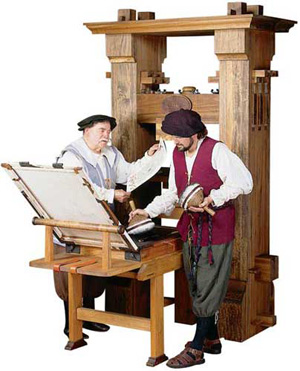
This all changed when a German named Gutenberg built a printing press sometime around 1436.  Suddenly, ideas didn’t have to travel by word of mouth anymore (getting totally screwed up along the way.)  They could be written down and printed in large numbers.  So, if Wolfgang, a Bavarian smart guy, figured out a better way to grind wheat that knowledge was both easily assessable and, more importantly, widely distributed (with no embellishments.)  With this rapid exchange of information, the
layers of knowledge got remarkably thinner.  By the time Pope Urban VIII was threatening to cut off Galileo’s protruding parts for saying the Earth revolved around the sun — not the other way around — in 1633, there was no stopping it.  Galileo may have recanted his discoveries to save his appendages, but his book remained out there for anybody to read.

Thus it was that invention no longer had to rely on the genius of one person to initiate change, nor the local gossipmonger to spread the word about it.  Books changed all that; ideas became permanently available.  Philosophers and scientists could build on each others’ knowledge just by reading each others’ books.  And each innovation was also written about, in turn, thus spawning dozens of refinements that continued the cycle.  The world of ideas expanded exponentially.  The layers of our society’s knowledge became thinner and thinner.

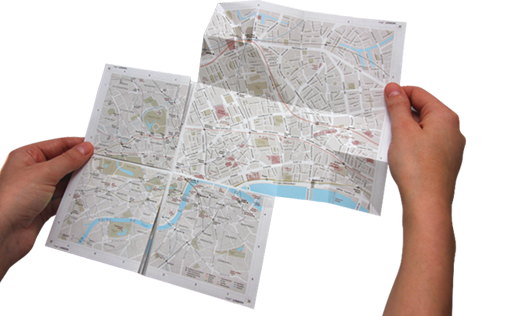
Skip forward two centuries and these days the layers of knowledge are so thin they don’t last more than a couple of years.  Some are added to our world and expanded upon before people are even acquainted with them.  For example, for 99% of history, people looked at a map if they wanted to know where they were going.  In the late 1990s, the GPS system revolutionized that.  However, before anybody could really cash in on a stand-alone GPS device, it became an accessory (App?) on our Smart phones.  The same thing is now happening with digital cameras and MP3 players.  These devices were born, lived and died in less time than it takes an average person to get a PhD in Sociology.

There is no longer a generation gap in our society.  There is only an information gap.  As the world spins ever faster all around us, we long for the security blanket of the objects we’re familiar with – whether they’re electronic devices or social interaction.  Nobody fully understands the world we live in (not that anybody ever did) but in the 21st century, more and more of us are falling further and further behind.  People are downloading information at such a furious rate they can no longer process it properly.  (For example, that last sentence wouldn’t have made sense a couple of generations ago.)   The result is we look with nostalgia on what we remember as a simpler time.  So the next time you see some kid with droopy drawers, talking to what is clearly a teenage prostitute, in a language akin to gibberish, blame it on Gutenberg: he started it all.