
People Who Go to Movies – Deserve Better

After years of hanging around this planet I’ve discovered that there actually are two kinds of people in the world.  There are people who watch films and people who go to movies.  They’re as different as pigs and porridge.  It really doesn’t matter where you take your cinematic pleasures — in front of a computer screen, at a funky (God, I hate that word) retro theatre, or on the privacy of your own sofa, etc. — the activity itself is basically the same.   There’s you (obviously) the story in front of you and your willing suspension of disbelief.  That’s it.  And it hasn’t changed since Les Freres Lumiere set up shop at the Salon Indien du Grand Cafe in Paris in 1895.  The major difference (and it’s huge) is the attitude people bring to the experience.

Not to be too judgemental, people who watch films are pompous asses.  They think the only reason anybody ever makes a movie, anywhere in the world, is for their personal interpretation at dinner parties.  And although I’d love to get a few kicks in at those folks, I’m going to leave them alone today.  Besides, they’re all hanging out at a couple of International Film Festivals this week.  Probably, they’re impatiently waiting for some name-brand personality (complete with personal assistant, juggling the Swag Bags) to wander by and pontificate on world poverty.  Incidentally, the loot in those bags could lift South Sudan out of the poorhouse tomorrow given half a chance.  So, go in peace, film watchers, but remember, your day is coming.

On the other hand, people who watch movies are fine, upstanding men and women who have fallen on hard times.  In rapid succession, they have seen the demise of cinematography, film editing, screen writing and acting — all killed off by computer-generated special effects.  There are now only four movies left in the universe.   They are, in no particular order, Chase Me, Girl Meets Boy, Kick Me in the Groin and They Came to Talk.  Of course, some would argue that Aren’t They Greedy Bastards?, Yet Another Cartoon and The Flying Guts of Gore (not Al, the other one) are also movies, worthy of mention.  They’re not.  May I point out that the last hand-drawn animated feature was The Lion King circa 1994 – Shrek and Woody are pixel-powered.  Likewise, everybody knows that The Flying Guts of Gore is not filmed around some stunt double’s horrible disembowelment for cinematic realism.  CGIs (computer generated images) are CGIs, regardless of where they appear.  Furthermore, Aren’t They Greedy Bastards? is really only a sub-genre of We’re All Doomed.  And unless you still believe Gilligan was actually on that island, you know We’re All Doomed is nothing more that thinly-veiled propaganda.  In fact, these days the veils are so thin they’re making guys like Josef Goebbels blush.
What’s been happening here is for the last twenty years, movie goers have become so starved for movies – any movies — they are willing to see the same four, over and over again – and pay big bucks for the privilege.  And contemporary movie makers are shameless about it.  Even as we speak, Hollywood has at least thirty re-makes in the works — not including the ones they’ve already done.  For example, Arthur, Conan, Clash of the Titans and The Karate Kid have already disgraced the big screen, and I’m not going to even mention True Grit.  However, I do hope someday somebody ruins a rehashed Fargo, and we’ll see just how pleased the Coen Brothers are about that.  Re-making movies is becoming the raison d’etre for Hollywood.  Believe it or not they’ve remade Footloose, and Logan’s Run and there’s talk of remaking Blade RunnerBlade Runner! There was even going to be a remake of The Lone Ranger with Johnny Depp as Tonto, but that fell through (probably because they couldn’t get Angelina Jolie to play Lone.)  Eventually the Oscar for original screenplay is going to go to Mack Sennett and Charlie Chaplin for The Little Tramp.
And when Hollywood isn’t regurgitating old movies, they’re overworking the franchise of others.  The minute box office receipts from any movie hit a certain level, hang on to your original merchandise because there’s going to be a sequel, a triquel, and a prequel.  Then, after that they just keep pumping them out.  Things like plot, character and setting simply don’t matter because all they use is the name.  Even the actors get fed up.  Spiderman lost Toby Maguire, Matt Damon quit being Bourne, nobody has a clue who Superman is anymore, and there’ve been enough Batmans (Batmen?) to rival the incarnations of a black belt Buddha.  No wonder he’s all tied up in emotional knots; he doesn’t know who he’s supposed to be — Val Kilmer or Christian Bale.

Of course, the willing suspension of disbelief is strained to the breaking point when actors try to rework characters decades too late.  Harrison Ford and Karen Allen were barely believable in The Crystal Skull, and Lucas and Spielberg are planning an Indiana Jones V.  Think about that!  Plus, they’ve resurrected John McClane for another crack and Die Hard (I hope it’s Die Hard: Once and for all.)  And I never thought I’d say this, but I wish somebody would just kill this current Bond and put him out of my misery.  Jason Statham, where are you?

The real problem is movie makers don’t trust their audience.  They make remakes, sequels to remakes and prequels to sequels of remakes because they think they hear the cash register in known quantities.  They don’t understand that people who go to movies love a good story – witness Slumdog Millionaire.  They might not nerd every detail of the director’s motivation or know all the ins and outs of lighting and camera angles but they do know a ripping good yarn when they see one.   These are the descendents of the people who made Gone with the Wind the highest grossing movie in the world for three decades.  They’re the grandchildren of the folks who went to Bogie movies before he was an icon and the kids of the parents who liked Marlon Brando even after he got fat.  These days movie goers go to schlock ‘cause that’s all there is.  All the good movies are called films and they hide out in Film Festivals.  There’s no chase scene in Lawrence of Arabia, no precocious kid in Casablanca and nobody got chopped to pieces in Cat on a Hot Tin Roof.  All those movies were shown in regular theatres and ordinary people went to see them.  Today, they’d probably be limited to Sundance or TIFF or some other such place.  People who go to movies deserve better than what they’re currently getting and people who watch films don’t appreciate what they’ve got.

Wit and Wisdom: Part II

Despite rumours to the contrary, the art of conversation hasn’t died.  It’s going on all around us — at 140 characters a second.  However, it’s ill; in fact, it’s in intensive care.  We don’t talk anymore because we don’t have to.  It’s a shame, but that’s the truth.  We communicate further, faster, to more people, more often, these days than at any other time in human history.  Unfortunately, it’s all without ever opening our mouths, although, sometimes the texting tongue is hard at work.  Wouldn’t it be the ultimate kick in the head to all the Fahrenheit 451 Doom Merchants (who’ve been predicting the end of books since the dawn of time) if we actually evolved beyond spoken language?  Could happen, but I doubt it.  We’d miss the sound, the cadence, the pause and that incredible nanosecond of recognition on the other person’s face.  Here are a few gems that might inspire you to help conversation get better.

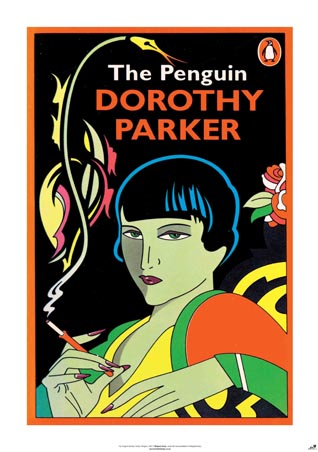
Dorothy Parker (1893 – 1967)
Part of the famous Algonquin Round Table, Dorothy Parker had a wit that cut like a whip through warm butter and she didn’t care who got splashed.  She wrote for Vogue, The New Yorker and Vanity Fair, as well as writing a regular review column called “Constant Reader.”  Parker also wrote plays and worked in Hollywood as a screenwriter, but it is her ability to turn a phrase inside, outside and upside down that we remember today.

This novel is not to be tossed lightly aside, but to be hurled with great force.
The best way to keep children home is to make the home atmosphere pleasant — and let the air out of the tires.
Brevity is the soul of lingerie
The only “ism” Hollywood believes in is plagiarism.
That woman speaks eighteen languages, and she can’t say “No” in any of them.
Money cannot buy health, but I’ll settle for a diamond-studded wheelchair.
She runs the gamut of emotions from A to B. (reviewing Katherine Hepburn.
Men seldom make passes/At girls who wear glasses

Will Rogers (1879 – 1935)
Interestingly enough, the social commentary of humorist Will Rogers is as biting and relevant today as it was seventy years ago.  Rogers, whose “cowboy philosopher” made him famous, always credited his success to simple observation.  He appeared in movies and wrote a newspaper column, but it was his stage show that was the most popular.  It would be interesting to hear what Rogers had to say about how little things have changed since his time.

Income tax has made liars out of more Americans than golf.
Even if you’re on the right track, you’ll get run over if you just sit there.
Democracy is the form of government you have to keep for four years, no matter what it does.
I would rather be the man who bought the Brooklyn Bridge than the man who sold it.
Everybody is ignorant, only on different subjects.
The minute you read something you can’t understand, you can almost be sure it was drawn up by a lawyer.
I can remember way back when a liberal was one who was generous with his own money.
There’s no trick to being a humorist when you have the whole government working for you.

Mark Twain (1835 – 1910)
Although Samuel Langhorne Clemens is noted for his novels (which include two classics of American literature, Tom Sawyer and Huckleberry Finn)  he was also a popular public speaker.  In fact, after losing most of his money to bad investments in 1893, he literally talked his way out of debt by lecturing around the world.  Here are just a few examples of Mark Twain’s famous wit and some of his comic observations.

There is no distinctly American criminal class — except Congress.
Never put off until tomorrow what you can do the day after tomorrow.
Water, taken in moderation, cannot hurt anybody.
If you tell the truth, you don’t have to remember anything.
The man who does not read good books has no advantage over the man who can’t read them.
An ethical man is a Christian holding four aces.
Wagner’s music is better than it sounds.
Reports of my death have been greatly exaggerated. (reply to the New York Journal which reported him dead)

Anonymous
Greater than Mark Twain or Will Rogers, greater even than the great Will Shakespeare himself, the greatest wit of all time is, of course, Anonymous.  Throughout history, Anonymous has effortlessly plucked wisdom from what seems to be thin air and shared it with the world.  Brilliant and unselfish, “Anon” (as he and she are affectionately called by friends) is, a genius for all time.

Show me a good loser and I’ll show you a loser.
Under capitalism, man exploits man; under socialism, the reverse is true.
It’s easier to get forgiveness than permission.
The people who think they know everything are very irritating to those of us who do.
If it wasn’t for the last minute, nobody would get anything done.
When you talk to God, you’re praying.
When God talks to you, you’re crazy.
Whoever said money can’t buy happiness didn’t know where to shop.
Happiness is a child whose father dies rich.

Internet (1972 – Present)
No greater democracy exists than the Internet.  Anybody — and I mean anybody — can be as smart or as stupid as they please, across the entire planet!  The witless wisdom of common humanity is on display 24/7 and nobody can stop it.  But, as a wise website once said, “Just because you can communicate doesn’t mean you have to.

Life is uncertain; eat your dessert first
I’ll be glad when they finally save the environment so I can go back to styrofoam cups.
Nobody ever bets enough money on a winning horse.
It’s like taking a broom and a cauldron to a witch hunt.
If you die with all the toys, you’re still dead.
Life is short: summer is shorter.
He’s got all of his marbles but some of them are square.
“Nouveau riche” is better than no “riche” at all.

Fashion: A history of the 20th Century

Believe it or not, it’s finally Spring, and to prove it, people all over the country are taking off their clothes.  Suddenly necklines and hemlines are jockeying each other for position, waistbands are so low as to violate the natural laws of decency anywhere north of the equator, and, to coin an old joke, the girls are just as bad.  Personally, I’m no follower of fashion; I have my time and I’m never going to leave it.  Nor am I old enough to berate young people for wearing the same things I wore at their age.  I really don’t care much about fashions, where they came from, where they’ve been or how they got here.  Besides, I know enough about history to understand this too shall pass, and if you keep your clothes long enough, eventually they won’t fit.

However, I’ve noticed a distinct pattern in women’s clothing over the last 100 years.  I’m not sure whether history follows fashion or vice versa, but in general, turbulent, troubled times favour the neckline, whereas affluent, settled times favour the hemline.  I’m not going to speculate on the pop psychology of all this, but here’s a brief history.  You can make up your own mind.

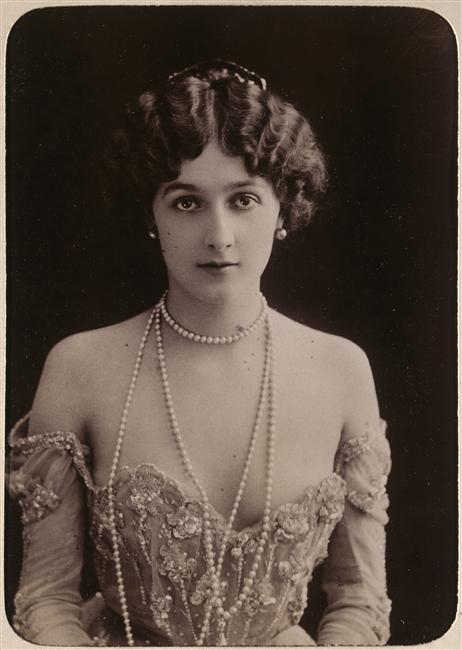
In the days just before World War I, most of Europe simply couldn’t wait to start shooting at each other.  The world was in a mess.  From Morocco to the Balkans, every second Tuesday brought another world crisis. There were petty wars everywhere and everyone with a trigger finger was itching to use it.  Female fashions were dictated by the Gibson Girl, an hourglass figure with a bust size big enough to topple over on an incline.  From the French salon to the Russian Imperial court, bare shoulders and décolletage were de rigueur for aristocratic women.  And as the world trudged irrevocably towards all-consuming war, the plunging necklines got so extreme various churches spoke out against the style.  Luckily, World War I broke out in 1914 or modesty would have been lost forever.

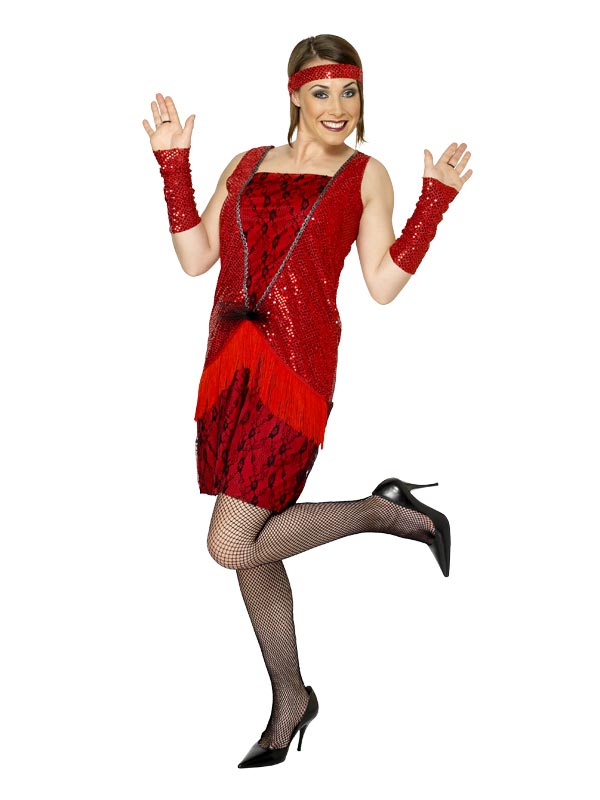
The minute the war was over and Johnny came marching home again, he discovered that the world was his oyster.  The Roaring 20s were one big drunken bash.  People everywhere were partying on the imaginary cash they were making on the stock market.  Even Prohibition couldn’t slow down the dance.  Meanwhile women’s fashion now favoured the flapper.  She was a straight up and down girl with bobbed (short) hair, a receding bustline and no hips.  She wore the shortest skirts since Ramses the Half Naked built the Sphinx and the only cleavage available was the one visible from her backless gown.  This fashion disappeared almost instantaneously on October 24th, 1929 when the New York Stock Market crashed and everybody had to get serious again.

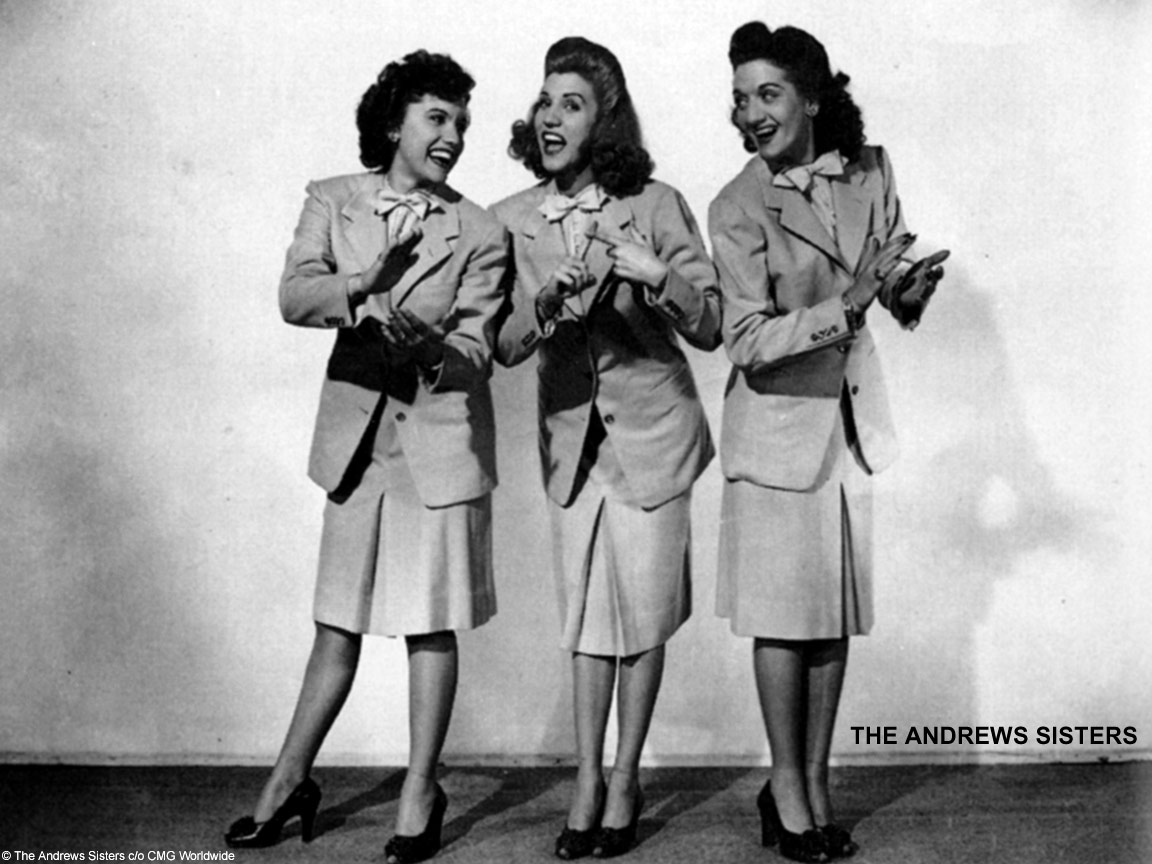
In the 30s, women buttoned up and the hemlines dropped to the ankles.  As the Depression deepened and the bad guys, Hitler and Mussolini, started marching, females took on a distinctly military look.  They wore jackets that covered their hips and artificially squared their shoulders.  Unlike the last time the world tried to kill itself, this time fashion was going to war.  Throughout the 40s, women remained broad shouldered; the hourglass was out, and the linebacker was in.  Just take a look at the Andrews Sisters to get a feel for it.

As the 40s slowly gave way to the 50s, and nuclear weapons brought a clear and present danger that humans could extinguish all life on the planet, women stacked on the petticoats again.  They wore a starched apparatus called the crinoline which flared at the hips so abruptly it completely disguised the female figure.  They also wore pullover sweaters, lightweight and tight, which combined with the sturdy bras of the time made the protruding parts look like they’d been put in a pencil sharpener.  This was the Sweater Girl Look that lasted well into the 60s.  It was the time of Jayne Mansfield, Marilyn Monroe and ever threatening nuclear holocaust.

But there was also a fashion schizophrenia going on in the 50s.  Employment was high, money was plentiful and the suburbs were solid and sturdy.  Everybody and her boyfriend had a car.  These conditions gave us a few fashion anomalies.  There were the B-grade science fiction movies for example, where the sweaters were tight and the skirts were flared and short.  Most notably, the bikini was a half naked salute to the sun and the Pacific islands of the Bikini Atoll, where, in 1946, the United States military detonated nuclear hell and wiped out paradise in six and a half seconds.

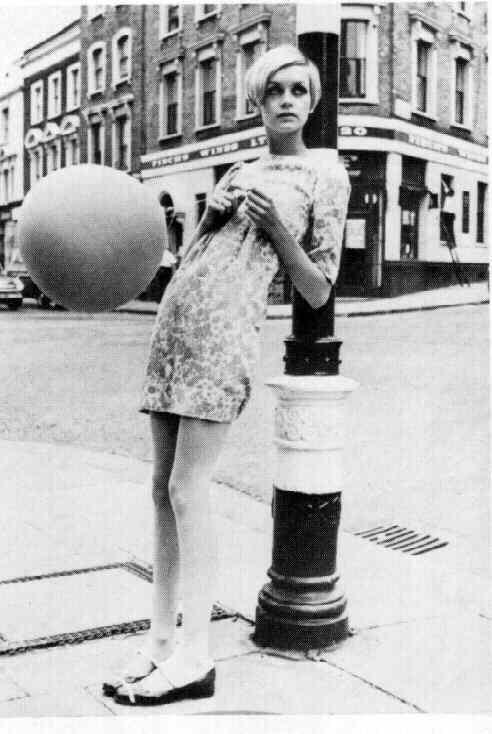
The 60s going on 70s was the last time female fashions were a single mass market.  Despite what historians tell us about protest and discord, the 60s were a drug-induced fiesta.  Young people might have protested during the day, but at night, pot and peyote ruled, music and dance were primitive, birth control was quick and easy and so was sex.  The party didn’t stop until Nixon’s National Guard took matters into their own hands at Kent State in 1970.   In 1965, Mary Quant introduced the miniskirt; $6.95 worth of fabric that covered the bare necessities.  Later she would go even further with the micro-mini and hemlines disappeared entirely.  The first supermodel, appropriately named Twiggy, drove the female form to the very edge of annihilation.  Thin was in so completely that the old-fashioned flapper looked positively voluptuous.  The little black dress became essential day, evening and professional wear, and women everywhere learned to bend at the knees.  The fashion 60s culminated when Ms. Quant premiered hot pants, an ill-conceived gesture to modesty that was snatched up by strippers and prostitutes around the world and has since been in continuous use.

The last days of dictated fashion came with disco.  In reaction to the Women’s Movement and the rise of feminism, fashion designers took to adorning men: the polyester leisure suit is the symbol of the age.  When disco died, prominent male fashion died with it.

For the last two decades of the 20th century, fashion was not so much about style as trend.  There were no overwhelmingly accepted forms of dress; however, both men and women did follow a number of trends religiously.  Hemlines and necklines made minor seasonal adjustments up and down, in quick reaction to the state of the world, but most fashion remained in flux.  There was, however, one female feature that did distinguish itself – the bum.

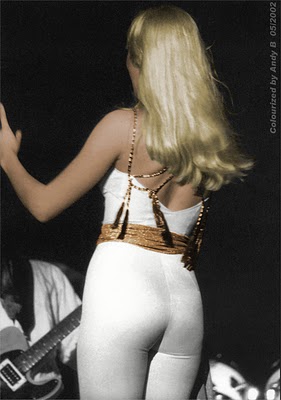
Introduced in Australia, in 1977, by Abba singer Agnetha Faltskog, the bum has dominated fashion ever since.  It shows up everywhere and has become the single fashion constant in a world that gyrates wildly between feast and famine.  Clothes have tightened up proportionately to display the bum prominently, and in some cases, silicon has been added to enhance its features.  Even today, in the 21st century, the bum remains front and centre on the fashion scene; Jennifer Lopez and the Kardashian sister are perfect examples.

Personally, I think the bum is a passing fancy and the fashion world is just catching its breath and waiting for another party or crisis to right itself.  In my mind, history will win out, but you can make up your own mind.